





What's Happening?
Democrat Rob Sand, the current state auditor, is leading Republican Zach Lahn by double digits in a new poll for the Iowa governor’s race. The poll shows Sand ahead by 10 percentage points among likely voters (51 percent to 41 percent) and by 11 points among all
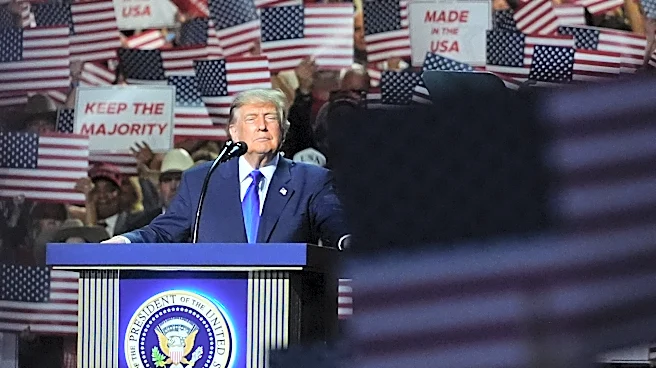
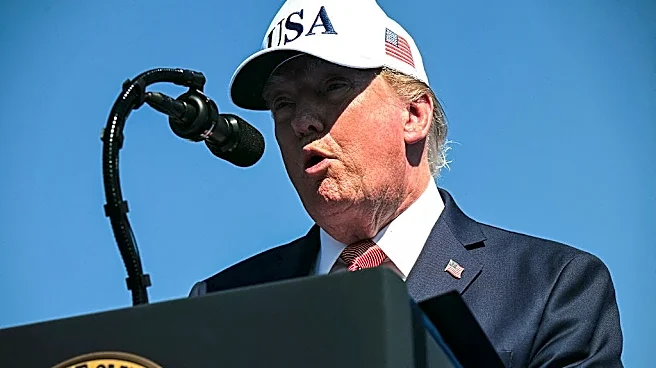
registered voters (50 percent to 39 percent). This lead comes despite Iowa having voted for President Trump in his three presidential bids, including a 13-point victory in 2024, indicating a rightward shift in the state over the past decade. Sand's strategy involves positioning himself as an independent voice, occasionally breaking from the national Democratic Party on cultural issues. For instance, he has stated that 'girls’ sports are for girls, and boys’ sports are for boys,' while also affirming support for reproductive freedom and gay marriage. The poll also revealed that President Trump is broadly unpopular in Iowa, with 57 percent disapproving of him, despite his past electoral successes in the state.
Why It's Important?
This poll suggests a potential shift in Iowa's political landscape, which has increasingly leaned Republican in recent years. A Democratic victory in the gubernatorial race would be a significant upset and could signal a broader trend of Democrats making inroads in traditionally red states, particularly among white, working-class voters who previously supported President Obama before shifting to President Trump. Rob Sand's ability to attract some Trump voters (12 percent) while maintaining strong support from Vice President Kamala Harris's 2024 voters (97 percent) indicates a nuanced appeal that could be a blueprint for Democrats in other states. The president's unpopularity in Iowa, despite his past wins, could be a contributing factor, potentially driven by economic concerns like the cost of living, inflation, and the impact of the Iran War on gas prices and tariffs on farmers. This race is being closely watched as a bellwether for Democratic competitiveness in the Midwest.
What's Next?
The Iowa governor's race is expected to be one of the most competitive in the upcoming midterms, with forecasters like The Cook Political Report and Sabato’s Crystal Ball classifying it as 'Leans Democratic.' The Lahn campaign has dismissed the poll as unreliable, while the Sand campaign has not yet commented. Both campaigns will likely intensify their efforts, with Sand continuing to emphasize his independent stance and Lahn focusing on painting Sand as a 'radical liberal.' The outcome will depend on various factors, including voter turnout, the effectiveness of campaign messaging, and the evolving national political climate. Democrats are also hopeful about other races in Iowa, including the U.S. Senate seat vacated by Senator Joni Ernst and three competitive congressional districts. The results of these races will provide further insight into the state's political trajectory and the broader national political landscape.
Beyond the Headlines
The Iowa governor's race highlights a deeper struggle within the American electorate, particularly in states that have experienced significant political shifts. Sand's strategy of appealing to a broad base, including some voters who supported President Trump, suggests a potential path for Democrats to regain relevance in areas where they have lost ground. This approach challenges the conventional wisdom of strict party-line voting and indicates a desire among some voters for candidates who can transcend partisan divides on certain issues. The unpopularity of President Trump in Iowa, despite his past electoral victories, underscores the fluid nature of voter sentiment and the impact of current events, such as economic conditions and foreign policy, on local elections. This race could serve as a case study for understanding how candidates can navigate complex political identities and appeal to diverse segments of the electorate in a highly polarized environment, potentially influencing future campaign strategies across the country.