

What's Happening?
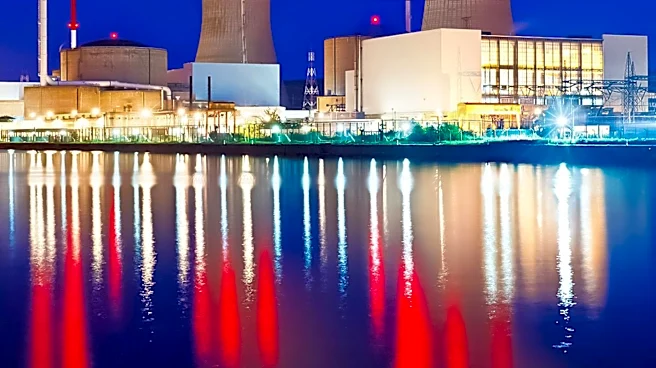
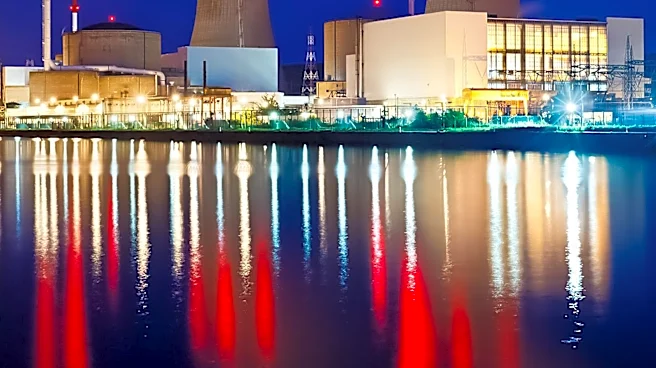
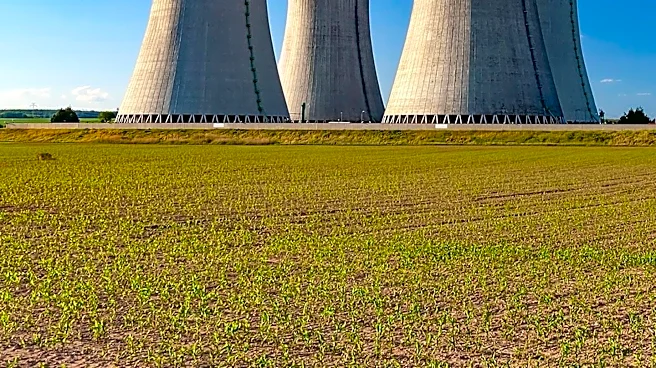
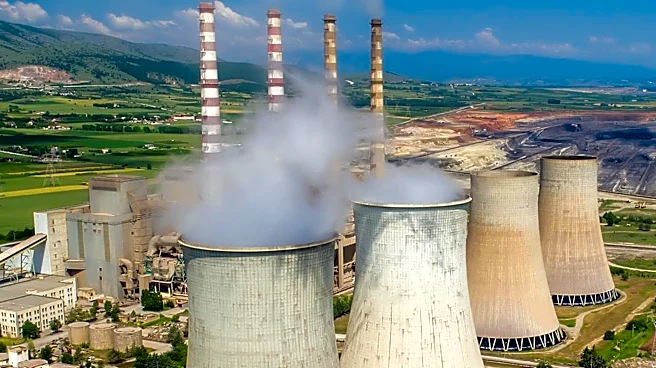
The Danube River's historically low water levels are causing significant operational challenges for nuclear power plants in Hungary and Romania. Hungary's Paks nuclear power plant, which typically generates a substantial portion of the country's electricity,
is operating at only 10% capacity due to insufficient cooling water. In Romania, the military has intervened by demolishing a rock outcrop in the Danube to improve water flow to the Cernavoda nuclear plant, which relies entirely on the river for cooling. The ongoing drought and high temperatures have exacerbated the situation, leading to power shortages and industrial impacts across the region.
Why It's Important?
The reduced capacity of nuclear power plants in Hungary and Romania highlights the vulnerability of energy infrastructure to climate-induced changes in water availability. This situation underscores the broader implications of climate change on energy security, particularly in regions dependent on river systems for cooling. The power shortages could have significant economic repercussions, affecting industries and households. The situation also raises concerns about the resilience of energy systems and the need for adaptive strategies to mitigate the impacts of climate variability.
What's Next?
If water levels do not improve, further reductions in power generation or even shutdowns of nuclear plants may occur, leading to increased reliance on alternative energy sources or imports. Governments may need to implement additional measures to manage energy consumption and explore long-term solutions to enhance the resilience of energy infrastructure. The situation could prompt discussions on diversifying energy sources and investing in technologies less dependent on water resources.