




What's Happening?
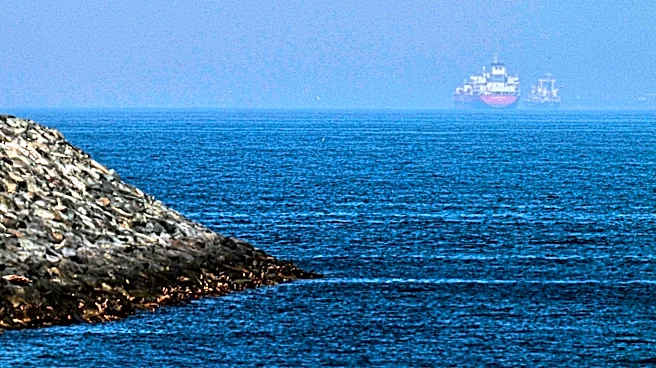
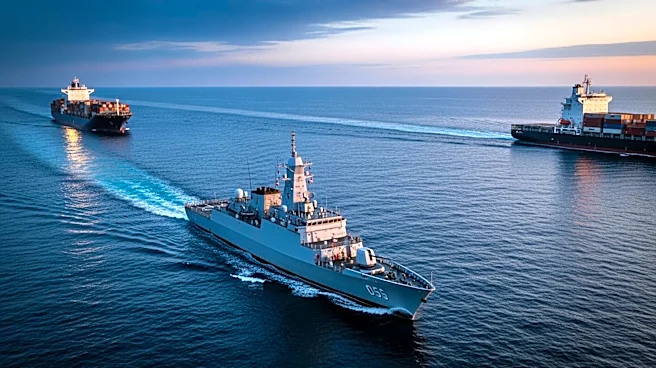
The US Navy has successfully escorted the Alliance Fairfax, a US-flagged vehicle carrier operated by Maersk's subsidiary Farrell Lines, through the Strait of Hormuz. This action is part of a broader effort by American forces to restore commercial shipping
in the region, which has been disrupted following the US-Israel conflict with Iran. The Strait of Hormuz is a critical maritime chokepoint, with approximately 20% of the world's oil passing through it before its virtual closure. The US Central Command (CENTCOM) announced that two US-flagged merchant vessels have successfully transited the strait, supported by US Navy guided-missile destroyers under Operation Project Freedom. The transit of the Alliance Fairfax was completed without incident, and all crew members were reported safe.
Why It's Important?
The successful escort of the Alliance Fairfax through the Strait of Hormuz is significant for global oil markets and international shipping. The strait is a vital passage for oil exports from the Middle East, and its closure has had substantial implications for global energy supplies and prices. The US Navy's involvement underscores the strategic importance of maintaining open shipping lanes in this region. This action also highlights the US commitment to ensuring the security of maritime routes, which is crucial for global trade and economic stability. The operation may help alleviate some of the disruptions caused by the recent conflict, potentially stabilizing oil prices and reducing shipping delays.
What's Next?
The US Navy is likely to continue its operations in the Gulf to ensure the safe passage of commercial vessels through the Strait of Hormuz. This may involve further escorts and increased military presence in the region. The situation remains tense, and any escalation in conflict could impact future shipping operations. Stakeholders, including oil companies and shipping firms, will be closely monitoring developments. The US government may also engage in diplomatic efforts to de-escalate tensions and secure long-term stability in the region.