



What's Happening?
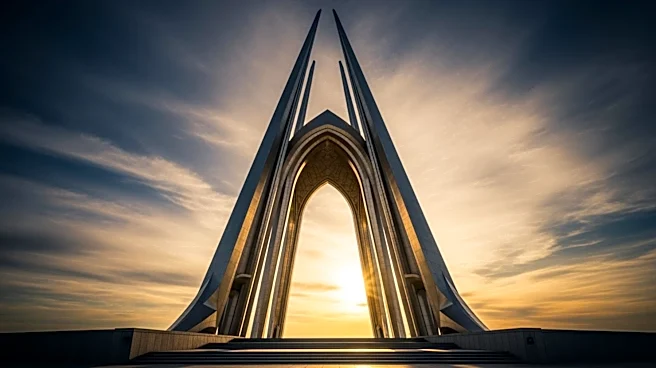
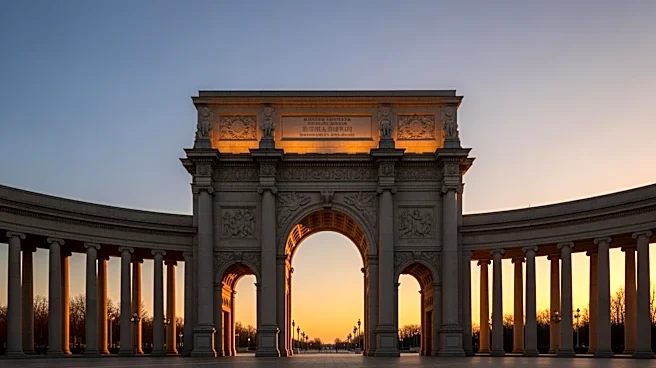
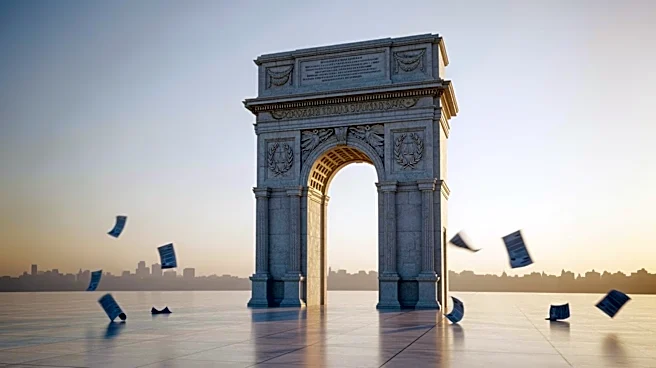
President Trump has revealed architectural plans for a triumphal arch to be constructed on the National Mall in Washington, D.C. The proposed monument, designed by Harrison Design, is intended to stand at one end of the Arlington Memorial Bridge, near
Arlington National Cemetery. The arch, which would be 250 feet tall, is meant to commemorate America's 250th birthday. The design resembles the Arc de Triomphe in Paris and features inscriptions such as 'One nation under God' and 'Liberty and justice for all.' The project has sparked controversy, with a group of Vietnam War veterans filing a lawsuit to prevent its construction, citing the need for congressional authorization for such structures on federal park grounds. The White House has stated that it will adhere to all legal requirements, with the Commission on Fine Arts and the National Capital Planning Commission set to review the plans.
Why It's Important?
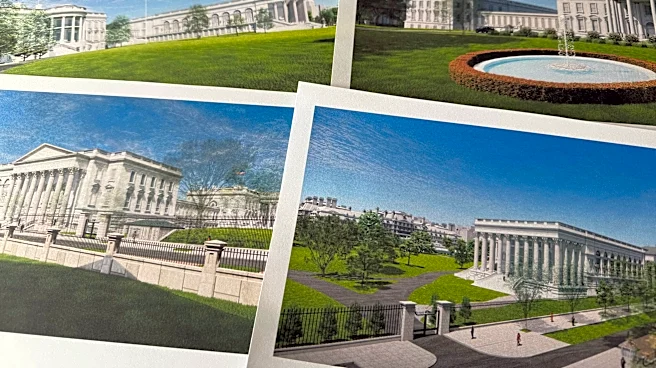
The proposed triumphal arch is part of a broader initiative by President Trump to reshape the architectural landscape of Washington, D.C. This project, along with others like the conversion of the White House Rose Garden and proposed renovations to the Kennedy Center, reflects a push towards classical architectural styles. The arch's construction could have significant cultural and historical implications, potentially altering the iconic skyline of the nation's capital. The legal challenges it faces highlight ongoing debates about presidential authority and the preservation of public spaces. If completed, the arch could become a new symbol of national pride or a point of contention, depending on public and political reception.
What's Next?
The plans for the triumphal arch are scheduled for review by the Commission on Fine Arts, which is currently composed of members appointed by President Trump. The National Capital Planning Commission will also provide input. The outcome of the Vietnam War veterans' lawsuit could delay or halt the project, depending on court rulings. Additionally, the project's funding, which is expected to come from both public and private sources, remains to be finalized. As these processes unfold, the administration's broader architectural agenda in D.C. will likely continue to face scrutiny and legal challenges.