



What's Happening?
The global frankincense market, valued at $363 million in 2023, is facing significant challenges due to the depletion of its natural sources. Frankincense, a resin obtained from the Boswellia tree, is highly valued for its aromatic properties and is a staple
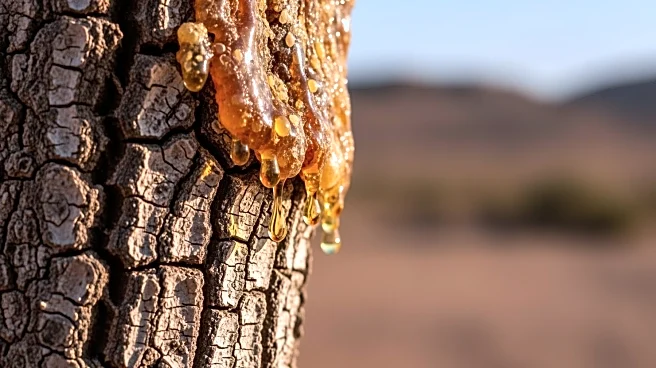
in the wellness industry. The demand for Boswellia frereana, particularly from Somaliland, is high, earning it the nickname 'the king of frankincense.' However, the sustainability of frankincense production is under threat as the natural groves are failing. Harvesters like Salaban Salad Muse, who rely on these trees for their livelihood, are witnessing the decline firsthand. The process of harvesting involves tapping the trees to collect the resin, which hardens into 'tears' over time. This traditional method is being scrutinized as the industry seeks sustainable solutions to preserve the Boswellia trees and the communities dependent on them.
Why It's Important?
The decline in frankincense production has significant implications for the global wellness industry, which heavily relies on this resin for its products. As one of the oldest traded commodities, frankincense holds cultural and economic importance. The potential scarcity could drive up prices, affecting both producers and consumers. For local communities in regions like Somaliland, the loss of frankincense production threatens their economic stability and cultural heritage. The situation calls for urgent attention to sustainable harvesting practices and conservation efforts to ensure the survival of the Boswellia trees and the livelihoods they support.
What's Next?
The frankincense industry is at a crossroads, with stakeholders needing to implement sustainable practices to prevent further depletion of natural resources. This may involve developing new methods of cultivation and harvesting that do not harm the trees. Additionally, there could be increased efforts in research and development to find alternative sources or synthetic substitutes for frankincense. The industry may also see a push towards certification and traceability to ensure ethical sourcing. These steps are crucial to maintaining the balance between meeting global demand and preserving the natural environment.
Beyond the Headlines
The challenges facing the frankincense industry highlight broader issues of environmental sustainability and the impact of global demand on natural resources. The situation underscores the need for industries to adopt more sustainable practices and for consumers to be aware of the environmental costs of their purchases. It also raises questions about the role of traditional knowledge and practices in modern industries and how they can be integrated into sustainable development strategies.