



What's Happening?
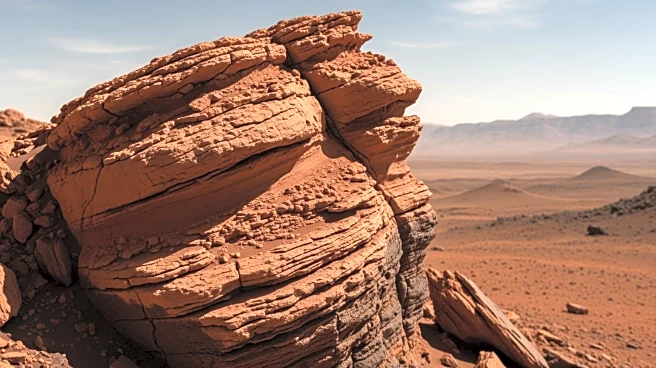
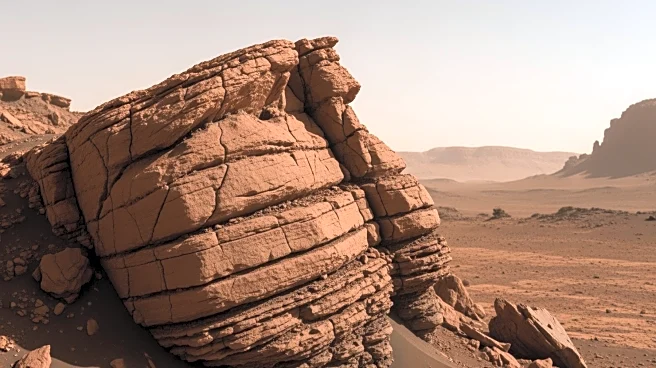
NASA's Curiosity Rover has completed its exploration of the Martian 'boxwork terrain,' revealing significant geological insights that could reshape our understanding of Mars' history. This mission, conducted in the southern reaches of Mount Sharp, focused
on an area characterized by intricate rock formations. These formations, resembling geometric patterns, are believed to have formed under specific environmental conditions. Curiosity utilized its Mastcam, ChemCam, and APXS instruments to map the region and analyze the composition of rocks and the Martian atmosphere. The rover's findings suggest a more complex sedimentary history on Mars, potentially indicating past conditions that could have supported life. The data collected is crucial for understanding Mars' ancient climate and geological evolution.
Why It's Important?
The discoveries made by Curiosity are pivotal in piecing together the history of water on Mars, a key factor in assessing the planet's potential for past habitability. Understanding how water once flowed and shaped Mars' surface is essential for future missions, particularly those aimed at searching for life beyond Earth. The insights gained from the boxwork terrain contribute to a broader understanding of Mars' geological history and its capacity to support life. This knowledge is vital for planning future exploration missions, including those involving human presence on Mars. The ongoing research by the Curiosity team not only enhances our understanding of Mars but also brings humanity closer to answering whether life ever existed on the Red Planet.
What's Next?
The data collected by Curiosity will serve as a foundation for future Mars exploration missions. This includes the work of the Perseverance rover, which is currently exploring other regions of Mars, and future missions that may involve human exploration. The findings from the boxwork terrain will inform the planning and execution of these missions, particularly in selecting landing sites and scientific objectives. As scientists continue to analyze the data, they will refine their understanding of Mars' geological history and its potential to support life, guiding the next steps in the search for extraterrestrial life.