





What's Happening?
During World War II, a vast and effective Filipino resistance movement, comprising over 260,000 active fighters, significantly aided the Allied forces in liberating the Philippines from Japanese occupation. These partisans engaged in extensive intelligence
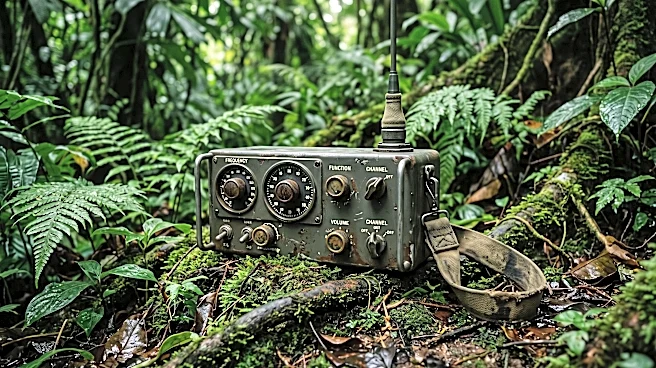
gathering, including coastwatching operations that provided crucial information to Allied commanders in Australia and Pearl Harbor, leading to the sinking of Japanese warships and safer amphibious landings. Guerrilla units conducted sabotage, ambushes, and cleared entire islands of Japanese troops, often fighting alongside American forces. Notable operations included joint Philippine-American efforts to liberate prisoner-of-war camps at Cabanatuan and Los Baños. By the time American forces returned in 1944-1945, the well-prepared guerrillas provided tactical intelligence and engaged in conventional combat, helping to round up Japanese holdouts. The movement, however, was complex, with various factions including the communist Hukbalahap rebels and Moro guerrilla bands, whose differing objectives sometimes led to internal conflicts and postwar insurgencies.
Why It's Important?
The Philippine partisan movement's contributions were vital to the Allied victory in the Pacific and General Douglas MacArthur's successful return to the islands. Their intelligence networks significantly disrupted Japanese operations and provided critical tactical advantages to American forces, reducing Allied casualties and accelerating the liberation campaign. This extensive resistance demonstrated the resilience and determination of the Filipino people against foreign occupation. The movement also had a lasting impact on Philippine politics; many partisan commanders, such as Ramon Magsaysay, later rose to prominent political positions, including the presidency. However, the internal divisions within the resistance, particularly with the Hukbalahap, sowed seeds for postwar communist insurgencies, highlighting the complex legacy of wartime alliances and ideological conflicts. The recognition of these exploits underscores the importance of local resistance movements in global conflicts.
What's Next?
The legacy of the Philippine partisan movement continues to be studied and recognized for its significant role in World War II. Ongoing historical research and educational initiatives aim to further document and honor the contributions of these fighters. The stories of their bravery and strategic importance serve as a testament to the power of organized resistance. For the Philippines, understanding this period remains crucial for national identity and historical memory, influencing how the nation views its past struggles and alliances. The complexities of the partisan movement, including its internal conflicts and postwar implications, continue to offer valuable lessons on the dynamics of insurgency, nation-building, and the long-term effects of war on society.
Beyond the Headlines
Beyond the immediate military impact, the Philippine partisan movement represents a profound example of national resistance and self-determination. The movement's ability to operate effectively despite being poorly armed initially, and later with American aid, showcases the strategic importance of local knowledge, terrain familiarity, and popular support in guerrilla warfare. The internal factionalism, particularly the rise of the Hukbalahap, also illustrates how wartime resistance can evolve into postwar political and social movements, shaping a nation's future. This historical context provides insights into the challenges of unifying diverse groups under a common cause and the enduring impact of ideological differences. The recognition of these partisans also highlights the often-underestimated role of non-state actors in major global conflicts and their lasting influence on geopolitical landscapes.