


What's Happening?
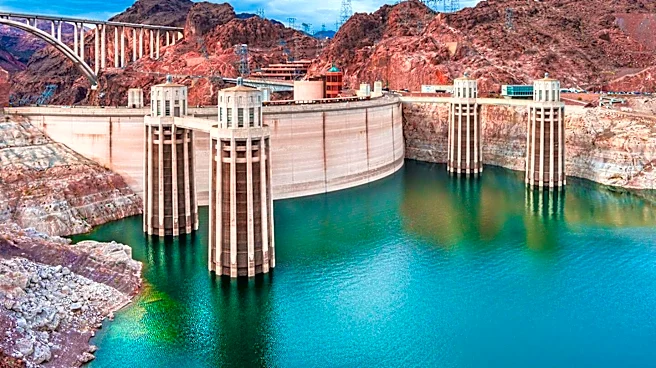
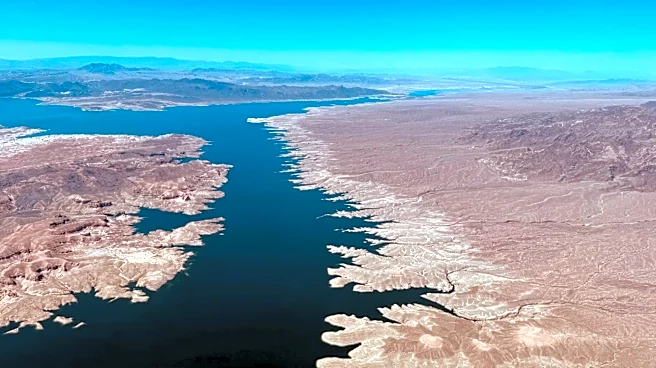
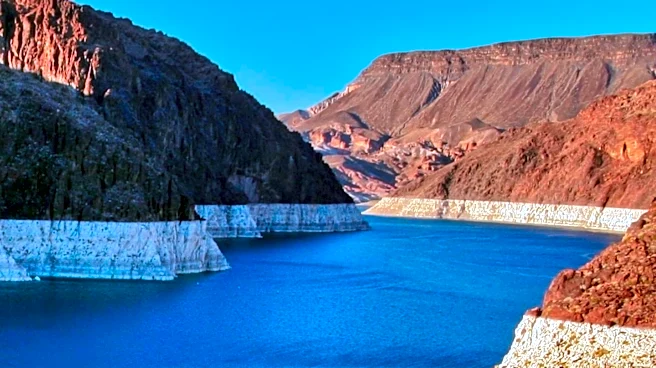
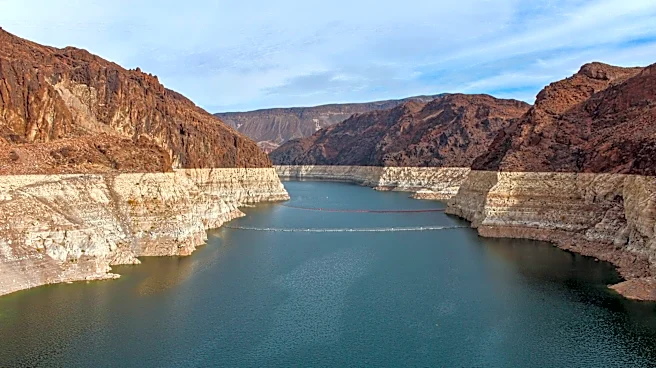
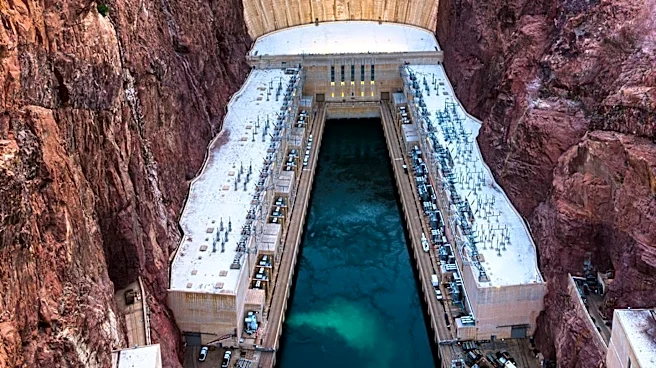
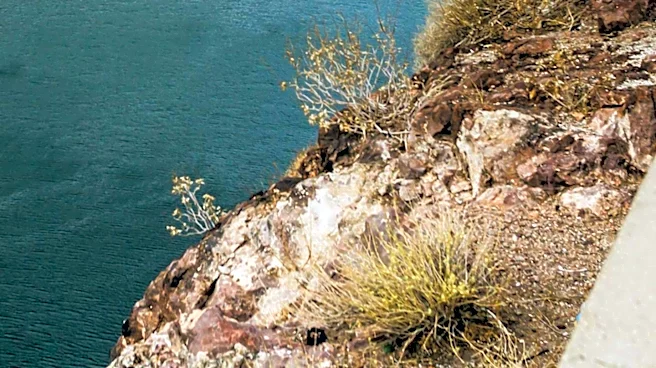
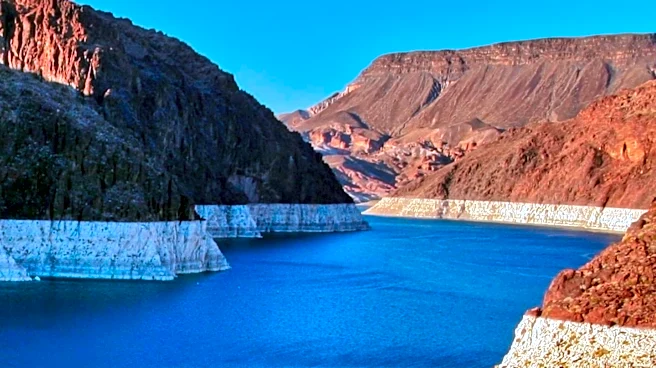
Lake Mead, the largest reservoir in the United States, has reached a new record low, threatening the power generation capacity of the Hoover Dam. As of August 7, the water level dropped to approximately 1,040.5 feet above sea level, the lowest since the reservoir was
filled. This decline poses a significant risk to the dam's ability to generate electricity, as it is projected that if the water level falls below 1,035 feet, twelve of the dam's seventeen turbines will shut down. This would reduce the dam's power output from its current capacity of 1,302 megawatts to just 382 megawatts, a 70% reduction. The situation is exacerbated by federal policies that prioritize water retention at Lake Powell, further reducing inflows to Lake Mead.
Why It's Important?
The reduction in power generation at Hoover Dam will have significant economic implications, particularly for rural communities in Nevada that rely heavily on this source of electricity. As the dam's output decreases, these areas will face higher electricity costs as they are forced to purchase more expensive market power. This shift will disproportionately affect smaller utilities and rural customers, who have fewer resources to absorb the increased costs. Additionally, the situation highlights broader issues of water management and policy decisions that have long-term impacts on regional power and water supplies.
What's Next?
If current projections hold, Lake Mead's water level could continue to decline, potentially reaching 1,015 feet by next summer. This ongoing decrease will further strain the power generation capacity of Hoover Dam. Local utilities are attempting to mitigate the impact by securing alternative power sources, but the challenges of replacing such a significant portion of their electricity supply remain daunting. The federal government and regional stakeholders will need to address the underlying water management issues to prevent further deterioration of the situation.