




What's Happening?
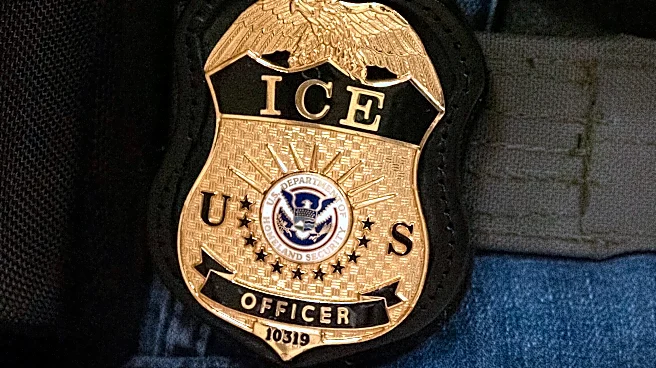
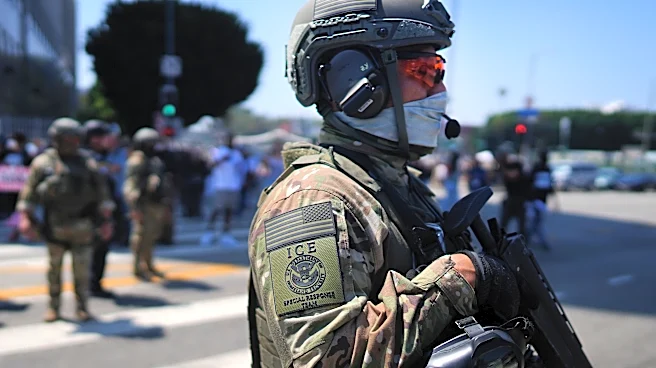
U.S. Immigration and Customs Enforcement (ICE) announced plans to equip all field officers with body cameras by the end of August. This move aims to provide a visual record of immigration enforcement operations. However, the Associated Press reported
on ICE's policy, highlighting provisions that allow ICE leadership to withhold or delay footage release after serious incidents. Acting Director David J. Venturella defended the policy, stating it aligns with federal law and aims to protect investigations and privacy. The policy includes a provision for expedited footage release when deemed in the agency's best interest, which Venturella claims was mischaracterized by the AP. ICE has faced scrutiny following recent fatal shootings by officers, none of which were recorded with body cameras.
Why It's Important?
The implementation of body cameras for ICE officers is significant as it promises increased transparency and accountability in immigration enforcement. However, the policy's flexibility in releasing footage raises concerns about potential lack of transparency, especially in cases involving serious incidents. This development is crucial for public trust in federal law enforcement agencies, as it addresses ongoing debates about oversight and accountability. The scrutiny ICE faces, particularly after recent incidents, underscores the need for clear and consistent policies that balance transparency with investigative integrity.
What's Next?
As ICE moves forward with equipping officers with body cameras, the agency will likely face continued scrutiny from civil rights groups and the public regarding its policies on footage release. The effectiveness of these cameras in promoting transparency will depend on how ICE navigates the balance between privacy, investigation integrity, and public accountability. Future incidents involving ICE officers will test the agency's commitment to transparency and may prompt further policy revisions or legislative action.