






What's Happening?
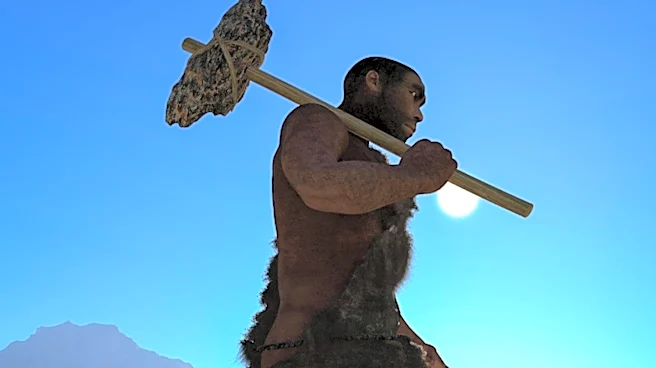
Scientists have uncovered new fossil footprints in Kenya that provide fresh insights into the extinct hominin species known as 'Nutcracker Man' or Paranthropus boisei. These footprints, dating back approximately 1.4 million years, suggest that P. boisei individuals
were taller and heavier than previously thought, with males potentially reaching up to 6 feet in height. The footprints also indicate complex social behavior, as they appear to have been made by a group of adult males traveling together. This discovery offers a new perspective on the physical characteristics and social dynamics of this ancient species.
Why It's Important?
The discovery of these footprints is significant as it challenges previous assumptions about the size and social behavior of P. boisei, providing a more nuanced understanding of this extinct species. By revealing that P. boisei may have been more similar in size to modern humans, the findings contribute to the broader understanding of human evolution and the diversity of hominin species. The insights into their social behavior also offer clues about the evolutionary pressures and environmental conditions that shaped early human ancestors, enhancing our knowledge of human history.