



What's Happening?
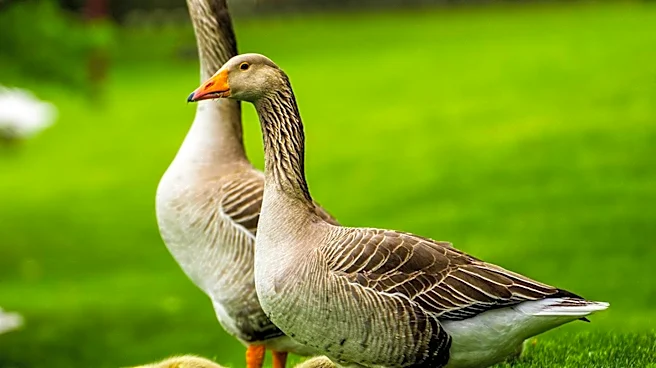
The U.S. Fish and Wildlife Service (USFWS) has released a series of photographs capturing day-old Canada goose goslings leaping from their nests. These nests are typically situated on platforms 25 feet in the air. Photographer Jake Bonello, who is also
the refuge manager at the Julia Butler Hansen Refuge for the Columbian White-tailed Deer, took these images. The USFWS and the U.S. Department of the Interior have clarified that this behavior is normal for goslings. They are lightweight, and their fluffy down provides a cushion for the fall. After this initial leap, the goslings remain close to their parents throughout the summer until they are capable of flight. Canada geese typically lay clutches of around six eggs, and after approximately 25 days of incubation, the goslings are ready to walk and swim within a day of hatching.
Why It's Important?
This event highlights a fascinating aspect of wildlife behavior and the natural life cycle of Canada geese, which are a common and recognizable species across the United States. The images shared by the USFWS serve an important educational purpose, informing the public about the unique adaptations and survival strategies of these birds. Understanding such natural phenomena can foster greater appreciation for wildlife and conservation efforts. For wildlife photographers and enthusiasts, it showcases a rare and dynamic moment in nature, emphasizing the dedication required to capture such events. The role of refuge managers like Jake Bonello in documenting and sharing these observations is crucial for public engagement and for contributing to the broader understanding of ecological processes within U.S. wildlife refuges.
What's Next?
The goslings, having completed their initial leap, will now spend the summer months under the close supervision of their parents. During this period, they will grow, develop their flight feathers, and learn essential survival skills. The USFWS and refuge staff will continue to monitor the wildlife within the Julia Butler Hansen Refuge, ensuring the well-being of these and other species. Educational outreach efforts, potentially including more photographs and information about Canada geese and other local wildlife, may continue to be shared with the public. This ongoing documentation contributes to long-term data collection on wildlife populations and behaviors, which is vital for conservation planning and management within U.S. national wildlife refuges.
Beyond the Headlines
Beyond the immediate spectacle of the goslings' leap, this event subtly underscores the broader ecological balance and the resilience of wildlife in natural habitats across the U.S. It also highlights the critical role of protected areas, such as the Julia Butler Hansen Refuge, in providing safe environments for species to thrive and exhibit their natural behaviors. The act of goslings leaping from such heights, while seemingly perilous, is a testament to evolutionary adaptations that ensure species survival. This natural process also serves as a reminder of the interconnectedness of ecosystems and the importance of preserving these spaces for future generations to observe and learn from. The work of photographers like Jake Bonello, often associated with government agencies, plays a vital role in bringing these natural wonders to a wider audience, fostering a sense of stewardship and environmental awareness.