





What's Happening?
The U.S. Treasury Department has sanctioned a fleet of 10 Ecuadorian fishing vessels and 15 Ecuador-based individuals and entities for their alleged involvement in smuggling tons of cocaine to Mexico, with the ultimate destination being the United States.
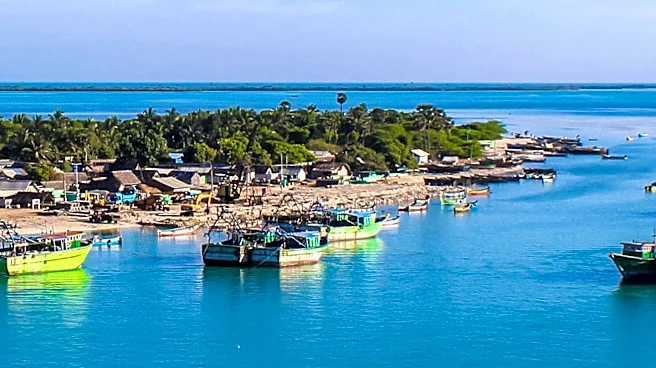
These vessels, operating near Manta, Ecuador, under the guise of legitimate fishing businesses, are accused of secretly transferring cocaine to smaller 'go-fast' boats. They also provided logistical support, including food and refueling services, to these speedboats. One specific vessel, the 'Todos Vuelven,' is accused of directly transporting large quantities of cocaine. The sanctioned entities are reportedly affiliated with two of Ecuador's most violent cartels, Los Choneros and Los Lobos, which maintain connections with Mexican cartels like the Sinaloa Cartel and the Jalisco Cartel Nueva Generación (CJNG). The Office of Foreign Assets Control (OFAC) identified these vessels and associated properties as blocked assets as part of this action.
Why It's Important?
This action by the U.S. Treasury highlights the evolving and complex nature of international drug trafficking, particularly its impact on U.S. national security and public health. The use of seemingly legitimate fishing operations as a front for large-scale cocaine smuggling underscores the challenges faced by law enforcement agencies in interdicting illicit drug flows. The involvement of Ecuadorian cartels, in collaboration with major Mexican cartels like the Sinaloa Cartel and CJNG, demonstrates the interconnectedness of criminal organizations across the Americas. This network facilitates the movement of significant quantities of cocaine into the U.S., contributing to drug-related violence and addiction within the country. The sanctions aim to disrupt the financial and logistical infrastructure of these criminal enterprises, thereby reducing the supply of illicit drugs reaching U.S. communities and weakening the operational capabilities of these dangerous cartels.
What's Next?
The sanctions imposed by the U.S. Treasury will block any assets of the designated individuals and entities within U.S. jurisdiction and prohibit U.S. persons from engaging in transactions with them. This move is expected to disrupt the financial and operational capabilities of the involved drug trafficking networks. Financial institutions and foreign individuals are also warned of potential sanctions if they engage in transactions with the designated parties. This action is part of a broader U.S. effort to combat drug trafficking in the Eastern Pacific, which has included operations like 'Pacific Viper' by the U.S. Coast Guard, resulting in significant cocaine seizures. Future actions may involve increased international cooperation with countries like Ecuador, Colombia, and Peru, utilizing advanced surveillance technologies such as drones, satellites, and radars to enhance maritime control and interdiction efforts. There may also be continued focus on dismantling the logistical and financial support structures that enable these trafficking operations.
Beyond the Headlines
The sanctioning of this fishing fleet reveals a deeper implication regarding the vulnerability of legitimate industries to criminal exploitation. The use of fishing vessels and the facade of legal businesses allows drug traffickers to blend into normal maritime activities, making detection and interdiction more challenging. This situation also points to potential systemic weaknesses in maritime oversight and control in countries like Ecuador, where the monthly movement of 30 to 40 tons of cocaine raises questions about the effectiveness of existing surveillance and enforcement mechanisms. Furthermore, the alleged use of subsidized fuel by these vessels for illicit activities highlights issues of corruption and the diversion of public resources to support criminal enterprises. This complex interplay of criminal networks, legitimate industries, and potential corruption poses a significant long-term challenge to regional stability and international efforts to combat organized crime, requiring a multi-faceted approach that includes law enforcement, economic sanctions, and capacity building in affected nations.