





What's Happening?
Prominent scientists are advocating for immediate 'emergency' interventions to safeguard marine life from the severe impacts of an unprecedented El Niño event, which is causing record-breaking ocean temperatures. This El Niño, amplified by 150 years of global
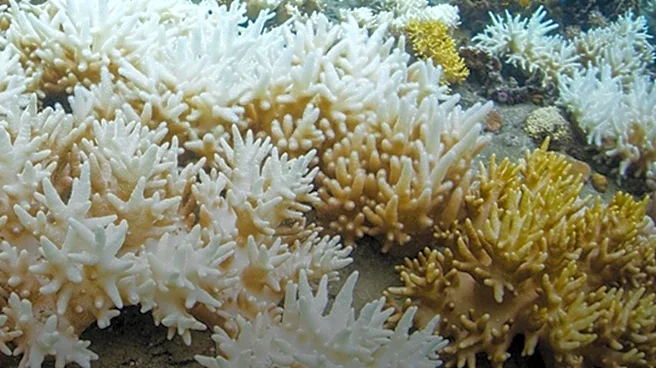
warming, is leading to sea surface temperatures up to 4°C above average in the east-central Pacific, a 60% increase over previous records. The elevated temperatures are pushing ocean ecosystems, particularly coral reefs and Antarctic krill, towards collapse. Michael Meredith of the British Antarctic Survey, a co-author of a journal article sent to governments including the U.S. and UK, emphasizes the urgency of these actions. The article highlights that past super El Niño events have already led to the collapse of fisheries, such as Peru's anchovy catch. Scientists are proposing measures like reducing fishing quotas, rescuing endangered species from the water, and exploring localized geoengineering techniques to mitigate the damage.
Why It's Important?
The call for emergency measures underscores the critical threat posed by rising ocean temperatures to global marine ecosystems and the industries that depend on them. The potential collapse of keystone species like coral reefs and Antarctic krill would have cascading effects throughout the marine food web, impacting biodiversity and the health of the oceans. For the U.S., this could mean significant disruptions to its fishing industry, coastal tourism, and the overall ecological balance of its marine territories. The proposed interventions, including geoengineering, highlight the desperate need for innovative solutions, but also raise questions about their long-term efficacy and potential unintended consequences. The situation emphasizes the interconnectedness of global climate patterns and local ecological stability, with direct implications for economic stakeholders and environmental policy.
What's Next?
Scientists are urging governments, including the U.S., to implement emergency actions swiftly. These actions include limiting fishing to allow depleted fish and shellfish populations to recover, potentially banning the harvest of certain predator species that protect vital ecosystems, and staging 'rescue missions' to temporarily house endangered marine specimens in controlled environments until ocean temperatures subside. Furthermore, there is a call for objective testing of localized geoengineering techniques, such as cloud brightening and artificial upwelling, to assess their effectiveness in cooling specific ocean patches. While some scientists, like Daniela Schmidt of the University of Bristol, caution against geoengineering due to unknown risks, the current extreme conditions are being viewed as a 'natural lab' to test these methods. The broader, long-term solutions of cutting fossil fuel emissions and expanding marine protected areas remain crucial, but immediate interventions are deemed necessary to prevent irreversible damage.
Beyond the Headlines
The current marine crisis extends beyond immediate ecological damage, revealing deeper ethical and policy dilemmas. The consideration of geoengineering, once a controversial last resort, is now being seriously discussed as an emergency measure, highlighting the escalating severity of climate change impacts. This shift prompts a re-evaluation of environmental stewardship and the boundaries of human intervention in natural systems. The debate over geoengineering's potential benefits versus its unknown risks underscores the complex ethical landscape of climate action. Furthermore, the situation exposes the vulnerability of global food security and coastal economies to climate-induced ecological shifts. It also emphasizes the need for international cooperation and robust scientific research to develop and implement effective, responsible solutions, while also addressing the underlying causes of global warming. The long-term health of the oceans, and by extension, the planet, hinges on these critical decisions.