




What's Happening?
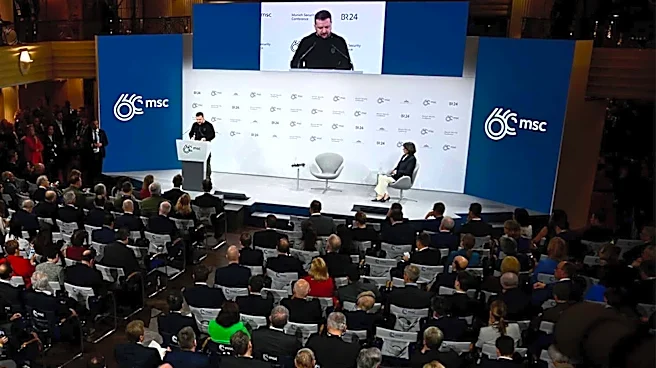
Ukraine has imposed sanctions on the creators of the popular animated series 'Masha and the Bear,' Animaccord Animation Studio, its founder, chief executive, director, screenwriter, and co-producer. This action was taken due to allegations of spreading
'pro-Russia narratives' and posing a threat to national security, as outlined in a decree signed by President Volodymyr Zelensky. Ukrainian officials claim that the globally watched series, translated into numerous languages, generates revenue for the Russian state and disseminates Kremlin propaganda. Vladyslav Vlasyuk, sanctions policy adviser to Zelensky, emphasized the necessity of responding to Russian propaganda, particularly when it targets children and is distributed through major international platforms.
Why It's Important?
This move highlights the increasing weaponization of cultural products, even children's entertainment, in geopolitical conflicts. It underscores Ukraine's proactive stance in combating perceived Russian influence beyond traditional political and military spheres. The sanctions could set a precedent for how nations address media content produced by adversaries, potentially leading to broader scrutiny of foreign cultural exports. For the entertainment industry, it raises questions about the political implications of content creation and distribution, especially for companies operating across international borders. The action also reflects a growing concern over the subtle ways propaganda can be disseminated and its potential impact on public opinion, particularly among younger audiences.
What's Next?
The sanctions will likely lead to a reevaluation of 'Masha and the Bear's' distribution and viewership in Ukraine and potentially other countries aligned with Ukraine's stance. Animaccord Animation Studio and its key personnel will face restrictions, which could impact their operations and international collaborations. Other nations might observe Ukraine's actions as a model for addressing foreign media content deemed propagandistic. The incident could also prompt international platforms to review their content policies regarding politically sensitive material, especially children's programming. Further diplomatic discussions or disputes regarding media freedom versus national security concerns are also possible.
Beyond the Headlines
The sanctioning of a children's cartoon studio delves into the complex intersection of soft power, cultural influence, and national security. It suggests that in modern conflicts, even seemingly innocuous cultural products can be perceived as tools of statecraft. This raises ethical questions about censorship, freedom of expression, and the role of entertainment in shaping societal narratives. The long-term implications could include a more fragmented global media landscape, where content is increasingly scrutinized through a geopolitical lens. It also highlights the challenge of protecting children from propaganda while upholding principles of artistic freedom, forcing a re-examination of how cultural products are consumed and regulated in an interconnected yet politically divided world.