


What's Happening?
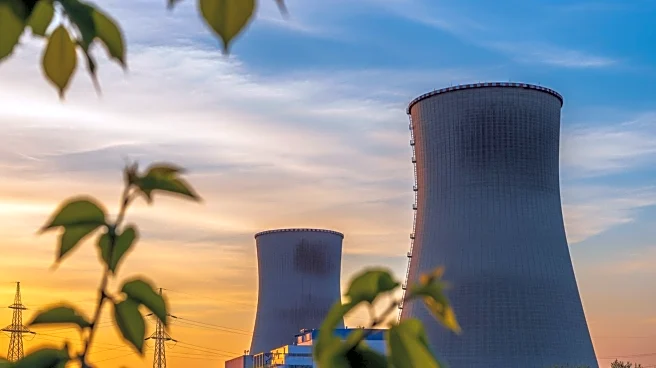
California is revisiting its long-standing moratorium on nuclear energy as the state grapples with increasing electricity demand and ambitious climate targets. A new legislative proposal aims to allow the deployment of next-generation nuclear technologies,
which have been federally licensed since 2005. This move comes as California seeks to achieve 90% clean electricity by 2035 and 100% clean energy by 2045. The proposal has garnered bipartisan support, with proponents arguing that modern nuclear technology is safer and produces less waste than older models. Despite the potential benefits, there remains significant opposition, particularly from environmental groups concerned about radioactive waste disposal. The Diablo Canyon Power Plant, California's last operational nuclear facility, was slated for closure but remains active following a delay by Governor Gavin Newsom due to power shortages.
Why It's Important?
The reconsideration of nuclear energy in California could have significant implications for the state's energy landscape and its ability to meet climate goals. As renewable energy sources like solar and wind face challenges in providing consistent power, nuclear energy offers a reliable alternative. The legislative shift reflects a broader trend in the U.S., where several states have lifted bans on nuclear power in response to climate change concerns. If California, a leader in environmental policy, embraces nuclear energy, it could influence other states and potentially reshape national energy strategies. However, the high costs and operational challenges associated with nuclear technology remain barriers to widespread adoption.
What's Next?
The proposed legislation will undergo further scrutiny and debate in the California state legislature. Key stakeholders, including utility companies and environmental groups, are expected to weigh in on the potential impacts. PG&E and other major utilities are currently assessing the implications of the bill. If passed, the legislation could pave the way for new nuclear projects, although actual deployment may take years due to regulatory and financial hurdles. The outcome of this legislative effort will be closely watched by other states and the federal government as they navigate their own energy transitions.
Beyond the Headlines
The debate over nuclear energy in California highlights broader ethical and environmental considerations. While nuclear power offers a low-carbon energy source, the unresolved issue of radioactive waste disposal poses significant challenges. Additionally, the potential for nuclear accidents, although reduced with modern technology, remains a concern for many. The discussion also underscores the tension between technological advancement and environmental stewardship, as California seeks to balance its energy needs with its commitment to sustainability.