
What's Happening?
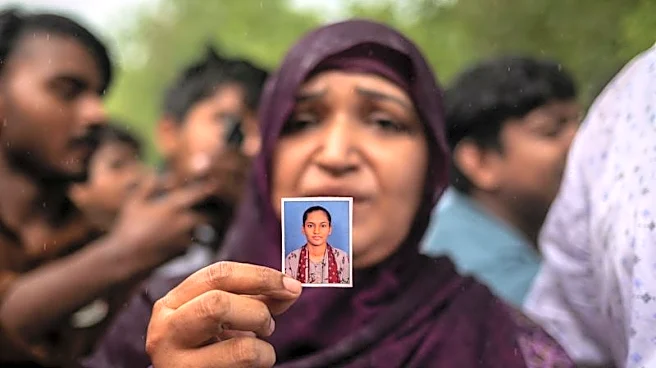
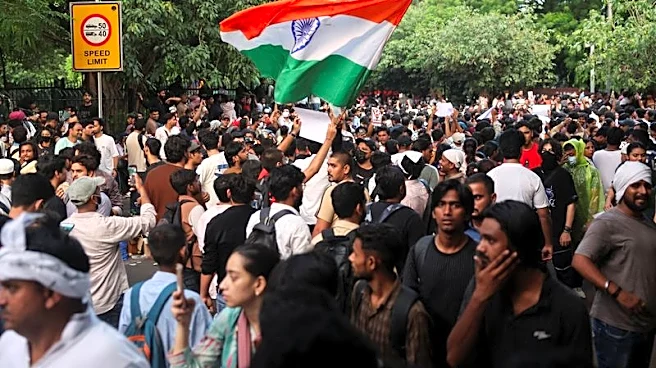
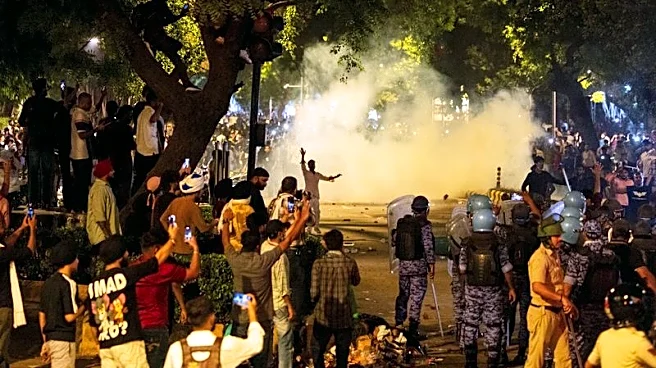
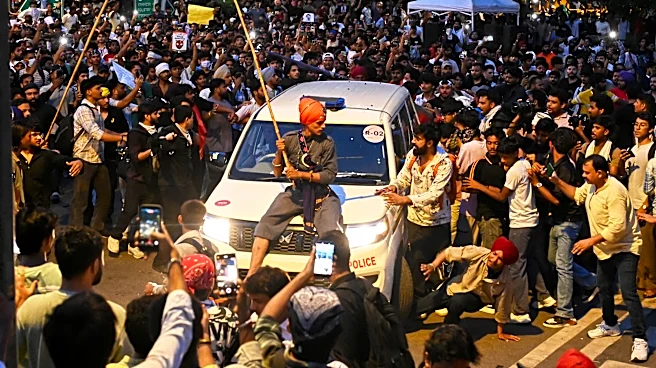
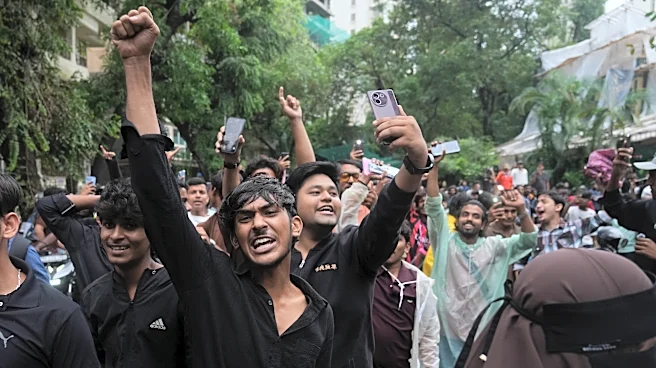
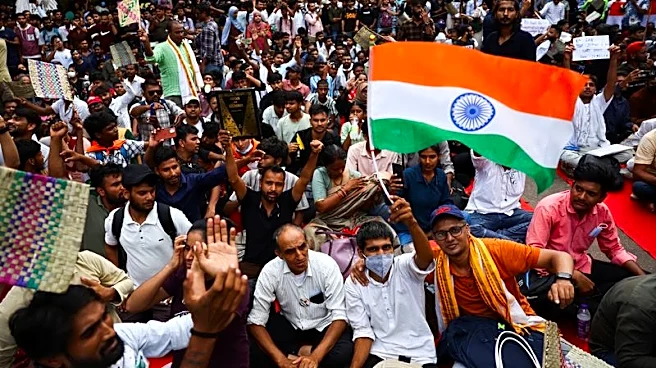
India's Education Minister, Dharmendra Pradhan, has resigned following significant youth-led protests demanding accountability and education reforms. The protests, which have been ongoing for a month,
were initially sparked by exam scandals, including the illegal sharing of entrance exams for the national medical program. These events have led to widespread anger among young people, who feel their futures are jeopardized and trust in the education system eroded. The movement, driven by the satirical Cockroach Janta Party, has utilized humor and memes to broaden its reach and intensify pressure on Prime Minister Narendra Modi's government. Protesters have taken to the streets in New Delhi and other cities, using social media to mock the administration and amplify their demands.
Why It's Important?
The resignation of the Education Minister marks a significant victory for the youth protesters and highlights the growing influence of young people in India. With nearly half of India's population under 25, this demographic represents a powerful electoral group. The protests challenge the government's accountability and transparency, potentially impacting future policy decisions. The use of humor and social media by protesters to engage and mobilize support reflects a shift in how political movements can gain traction and influence public discourse. This development could inspire similar movements globally, where young people leverage digital platforms to demand change.
What's Next?
The resignation may lead to further scrutiny of the Indian government's handling of education and other public policies. It remains to be seen how Prime Minister Modi will respond to the demands for reform and whether new policies will be implemented to address the concerns raised by the protesters. The movement's success could embolden other groups to use similar tactics to push for change, potentially leading to a broader reevaluation of government accountability and transparency in India.
Beyond the Headlines
The protests have broken a longstanding taboo of mocking Prime Minister Modi, indicating a shift in public sentiment and willingness to challenge authority. This could have long-term implications for Modi's political brand, which has been built on strength and decisiveness. The movement's use of humor and satire highlights a cultural shift in how younger generations engage with politics, preferring concise and impactful messaging over traditional forms of protest. This approach may influence future political campaigns and movements, both in India and internationally.