
What's Happening?
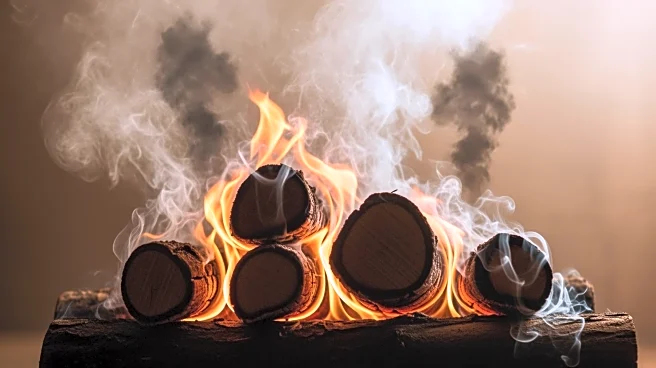
A recent analysis highlights that wood-burning fireplaces emit more carbon dioxide and particulates than fossil fuels, challenging the perception that they are a climate-friendly heating option. According
to experts, wood emits 2.5 times more CO2 than natural gas and 30% more than coal when burned for heat. Despite this, the use of wood-burning fireplaces remains popular for ambiance and warmth. The article suggests alternatives such as using fireplace inserts, EPA-certified wood stoves, or switching to gas or electric heating options like heat pumps, which are more efficient and environmentally friendly.
Why It's Important?
The findings underscore the environmental impact of traditional wood-burning practices, which contribute to air pollution and carbon emissions. As climate change concerns grow, there is increasing pressure to adopt cleaner energy sources. The shift away from wood-burning could reduce emissions and improve air quality, benefiting public health and aligning with broader environmental goals. The transition to more efficient heating technologies like heat pumps also reflects a trend towards electrification, which could lead to significant energy savings and reduced reliance on fossil fuels.
What's Next?
As awareness of the environmental impact of wood-burning grows, there may be increased regulatory scrutiny and potential restrictions on wood-burning appliances. Consumers might be encouraged to adopt cleaner alternatives, supported by incentives or subsidies for upgrading to more efficient heating systems. The market for heat pumps and other electric heating solutions is likely to expand, driven by technological advancements and policy initiatives aimed at reducing carbon footprints. This shift could also influence the energy sector, as demand for electricity increases and the infrastructure adapts to support cleaner energy sources.