


What's Happening?
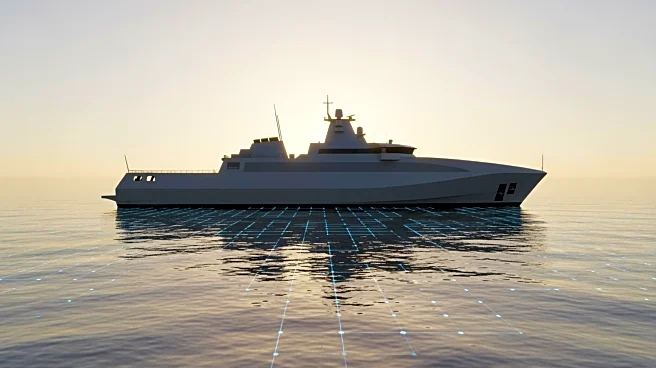
The U.S. Navy is advancing its efforts to integrate autonomous maritime technology into its operations. Blue Water Autonomy, a company specializing in drone vessels, is preparing for testing opportunities with the Navy. The company's CEO, Rylan Hamilton,
highlighted the importance of determining the timeline for deploying unmanned systems within the fleet. The Liberty Class, a nearly 200-foot autonomous surface vessel, has completed over a thousand hours of sea trials this year. Production is set to begin later this year at Conrad Shipyard in Louisiana. The Chief of Naval Operations (CNO) has emphasized the need for integrating robotic and autonomous systems into military assets, noting their potential to enhance operational capabilities. However, a dedicated unmanned systems strategy is not yet established, as the Navy is still exploring command and control frameworks.
Why It's Important?
The integration of autonomous maritime technology is significant for the U.S. Navy as it seeks to enhance its operational capabilities and maintain a strategic advantage. The development and deployment of unmanned systems could lead to more efficient naval operations, reducing the need for human intervention in certain scenarios. This shift could also impact defense contractors and suppliers, as the demand for innovative technologies increases. The Navy's focus on advanced manufacturing processes, as observed by the CNO, could further streamline maintenance and reduce downtime, improving overall fleet readiness. The reorganization of the Pentagon's arms export mechanisms aims to create a cohesive framework for defense sales, potentially boosting foreign investment and job creation.
What's Next?
The Navy will continue to test and evaluate autonomous systems, with a focus on integrating them into standard operational models. The ongoing performance review of defense contractors by the Department of Defense may influence future procurement strategies and contract awards. As the Navy progresses with its autonomous technology initiatives, it will need to address doctrinal challenges and logistical gaps to ensure effective deployment. The outcomes of these efforts could shape the future of naval operations and defense industry dynamics.