



What's Happening?
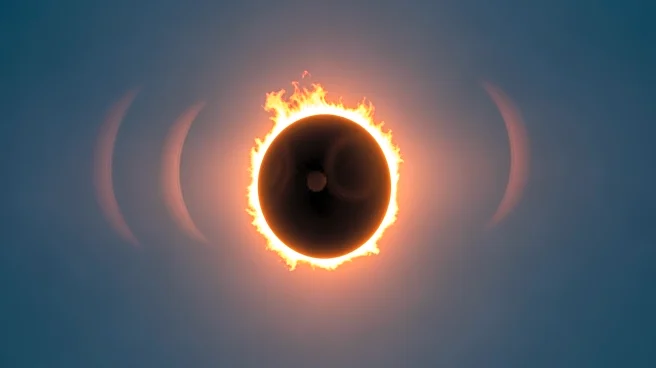
An annular solar eclipse, known as a 'ring of fire,' is set to occur on February 17, 2026, coinciding with Chinese New Year celebrations. This celestial event will be visible primarily from Antarctica, with partial views in southern Africa and South America.
Unfortunately, Indonesia will not be in the direct path of visibility. Astronomy enthusiasts in Indonesia are encouraged to watch the eclipse via live streams from international astronomical organizations. The eclipse presents a unique opportunity for educational engagement and public interest in astronomy, despite the geographical limitations.
Why It's Important?
The annular solar eclipse is a significant astronomical event that draws global attention, offering educational opportunities and fostering interest in space science. For regions within the eclipse's path, it provides a rare chance to observe a natural phenomenon that underscores the dynamics of celestial bodies. The event also highlights the importance of safe viewing practices, as direct observation without proper protection can cause eye damage. This eclipse serves as a reminder of the interconnectedness of global communities through shared scientific experiences.
What's Next?
As the eclipse approaches, educational institutions and media outlets are likely to increase coverage, providing resources and guidance on safe viewing practices. The event may inspire future astronomical research and public interest in upcoming celestial phenomena. Additionally, the eclipse's occurrence during a major cultural celebration like Chinese New Year could enhance its cultural significance and encourage broader participation in related activities.