


What's Happening?
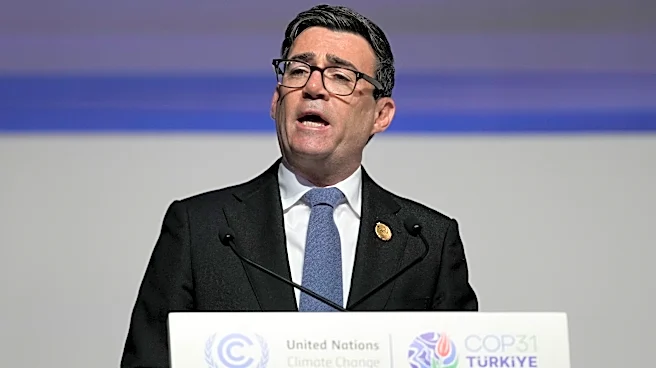
Prime Minister Shehbaz Sharif of Pakistan addressed COP31 in Antalya, Turkiye, advocating for grant-based finance and enhanced resilience and adaptation funds for climate-vulnerable countries. He emphasized that national efforts alone cannot substitute
for a fair and just global response to climate change, particularly when vulnerable nations require timely financial assistance that does not exacerbate their debt burdens. Prime Minister Shehbaz highlighted Pakistan's significant vulnerability to climate disasters, citing the 2025 floods in Buner district and the catastrophic 2022 floods that submerged one-third of the country, affecting 33 million people, causing over 1,700 deaths, and resulting in economic losses exceeding $30 billion. He reiterated his warning from the 2022 UN General Assembly that 'what is happening in Pakistan will not stay in Pakistan,' asserting that this prediction has become a stark reality. The Prime Minister also noted Pakistan's efforts in clean energy transition, with nearly 55% of its energy needs met by clean sources and a target to reduce projected emissions by approximately 50% by 2035.
Why It's Important?
Prime Minister Shehbaz Sharif's address at COP31 underscores the critical need for international climate justice and equitable burden-sharing in the face of global warming. His call for grant-based finance and increased adaptation funds is vital for countries like Pakistan, which contribute minimally to global emissions but bear the brunt of climate change impacts. The economic and human toll of recent floods in Pakistan illustrates the severe consequences of delayed or insufficient climate action. By advocating for financial mechanisms that do not deepen debt, Prime Minister Shehbaz is highlighting a significant barrier to climate resilience for developing nations. His remarks also serve as a global warning, suggesting that climate disasters in one region can have far-reaching implications, necessitating collective and urgent international action. The emphasis on clean energy transition within Pakistan, despite its economic challenges, demonstrates a commitment that requires reciprocal support from developed nations.
What's Next?
The discussions at COP31, including Prime Minister Shehbaz Sharif's appeal, will likely influence future international climate finance policies and the allocation of funds for adaptation and resilience. The call for grant-based finance and public-private partnerships aims to reshape how vulnerable countries receive support, moving away from debt-inducing loans. The international community's response to these pleas will be crucial in determining the pace and effectiveness of climate action in highly affected regions. Pakistan will continue its efforts in clean energy transition and disaster risk reduction, but the scale of future impacts will heavily depend on the global commitment to solidarity and concrete action. The Prime Minister's engagement with leaders like Turkish President Recep Tayyip Erdogan and Finnish President Alexander Stubb on climate cooperation indicates ongoing diplomatic efforts to secure technical expertise and support for flood forecasting, water management, and early-warning systems.
Beyond the Headlines
Prime Minister Shehbaz Sharif's powerful narrative, particularly the personal story of a wedding turning into mourning due to floods, humanizes the abstract concept of climate change and its devastating impact on ordinary lives. This emotional appeal aims to galvanize global leaders beyond policy discussions to recognize the urgent human cost. His warning against the 'weaponization of water' also introduces a geopolitical dimension to climate change, highlighting potential conflicts over shared resources exacerbated by environmental shifts. The broader implication is that climate change is not merely an environmental issue but a profound threat to human security, economic stability, and international peace. The ongoing struggle for equitable climate finance reflects a deeper ethical debate about historical responsibility for emissions and the moral obligation of developed nations to support those most affected.