








What's Happening?
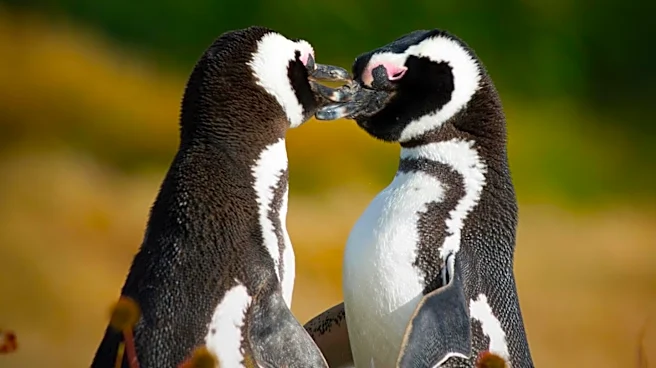
The Lincoln Park Zoo in Chicago is showcasing the story of Pilchard and Maynard, a bonded pair of male penguins, to highlight diversity in animal relationships. This initiative coincides with Pride Month and aims to illustrate the 'beauty of difference'
in the animal kingdom. The story of Pilchard and Maynard draws parallels to the well-known tale of Roy and Silo, two male penguins at New York's Central Park Zoo, who famously raised a chick named Tango. The children's book 'And Tango Makes Three,' based on their story, faced numerous challenges and was frequently targeted for removal from libraries due to its portrayal of a same-sex penguin family. Despite these challenges, the book remains a celebrated example of diversity in family structures.
Why It's Important?
The emphasis on animal diversity at zoos like Lincoln Park and Brookfield Zoo during Pride Month serves as a reminder of the natural occurrence of diverse family structures beyond human society. This initiative not only educates the public about animal behavior but also promotes acceptance and understanding of different family dynamics. The story of Roy, Silo, and Tango, along with Pilchard and Maynard, challenges traditional views and encourages a broader acceptance of diversity. By highlighting these stories, zoos play a crucial role in fostering inclusivity and educating visitors about the natural world's complexities.
What's Next?
As zoos continue to highlight stories of animal diversity, there may be increased public interest and support for educational programs that promote inclusivity. These initiatives could lead to broader discussions about diversity and acceptance in human society, potentially influencing public attitudes and policies. Additionally, the continued celebration of such stories during events like Pride Month may encourage other institutions to adopt similar educational approaches, further promoting understanding and acceptance of diverse family structures.
Beyond the Headlines
The portrayal of same-sex animal couples in zoos and literature raises important questions about the representation of diversity in educational materials. The challenges faced by 'And Tango Makes Three' highlight ongoing debates about censorship and the inclusion of diverse narratives in public spaces. These discussions are crucial in shaping how future generations understand and accept diversity. Furthermore, the celebration of animal diversity in zoos can serve as a catalyst for broader societal change, encouraging more inclusive and accepting communities.