



What's Happening?
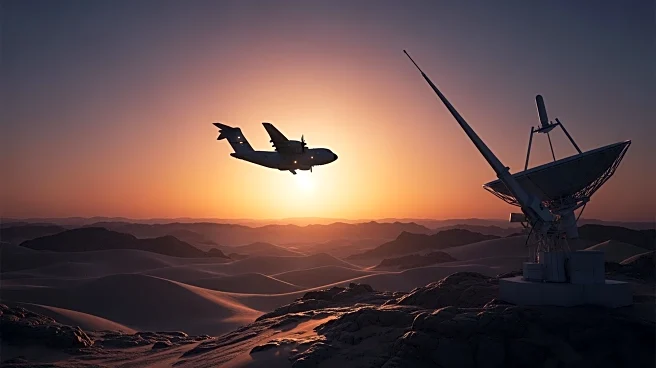
The Pentagon has initiated the deployment of U.S. military assets to the Middle East, including an aircraft carrier group and thousands of troops, as President Trump maintains the possibility of military strikes on Iran. This move comes amid Iran's crackdown
on protests, with President Trump warning of potential military action if Iran proceeds with mass executions of protesters. The USS Abraham Lincoln carrier strike group, along with three destroyers, has been redirected from the South China Sea to the Indian Ocean, joining other U.S. naval forces in the region. This deployment aims to bolster U.S. military presence and readiness in response to escalating tensions with Iran.
Why It's Important?
The deployment of U.S. military assets to the Middle East underscores the ongoing geopolitical tensions between the United States and Iran. This move could have significant implications for regional stability and U.S. foreign policy, as it signals a potential escalation in military engagement. The presence of additional U.S. forces in the region may deter Iranian actions but also risks further inflaming tensions. The situation could impact global oil markets, given the strategic importance of the Middle East in energy production and supply. Additionally, the deployment reflects the U.S.'s commitment to maintaining influence and security in the region amid shifting alliances and power dynamics.
What's Next?
The arrival of the USS Abraham Lincoln and accompanying naval forces in the Middle East is expected to enhance U.S. military capabilities in the region. The situation remains fluid, with potential for further military actions depending on Iran's response to U.S. warnings. Diplomatic efforts may be pursued to de-escalate tensions, but the possibility of military confrontation remains. The international community, including U.S. allies, will likely monitor developments closely, as any escalation could have broader implications for global security and economic stability.