
What's Happening?
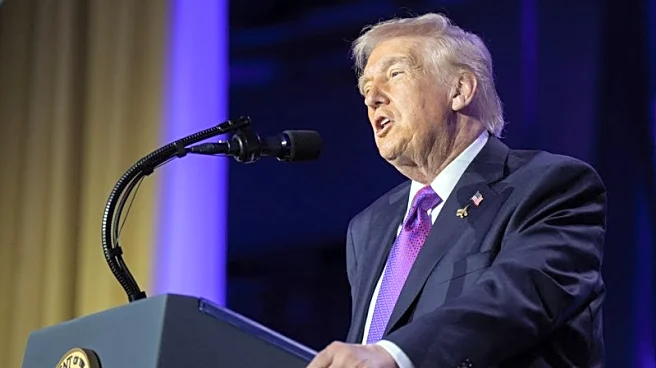
President Trump has initiated a significant shift in federal spending control, challenging the traditional balance of power between the executive branch and Congress. Over the past 11 months, the administration
has canceled billions in foreign aid, frozen research grants, and imposed new conditions on federal spending. These actions are part of a broader strategy to centralize budgetary control within the executive branch, bypassing Congress's traditional 'power of the purse.' This move has sparked concerns about the erosion of constitutional checks and balances, as Congress has historically been the primary body to authorize federal expenditures.
Why It's Important?
The implications of this shift are profound, potentially altering the foundational structure of U.S. governance. By consolidating spending power, the executive branch could enact significant policy changes without congressional approval, leading to less stable and more polarized governance. This could result in abrupt policy shifts with each new administration, undermining long-term planning and stability. The move also raises concerns about the potential for increased executive overreach, diminishing Congress's role in federal governance and potentially setting a precedent for future administrations.
What's Next?
Congress may need to assert its authority to restore the balance of power, possibly through legislative or judicial means. The situation could lead to increased political tension and legal challenges as lawmakers seek to reclaim their constitutional role. The outcome of this power struggle will likely influence future interactions between the executive and legislative branches, shaping the nature of U.S. governance for years to come.