






What's Happening?
Recent research from Tinshemet Cave in central Israel has unveiled groundbreaking evidence of direct interaction between Neanderthals and Homo sapiens during the mid-Middle Paleolithic period. The study, published in Nature Human Behaviour, indicates
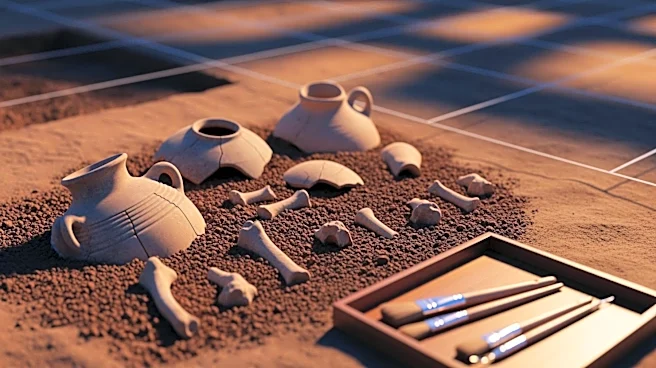
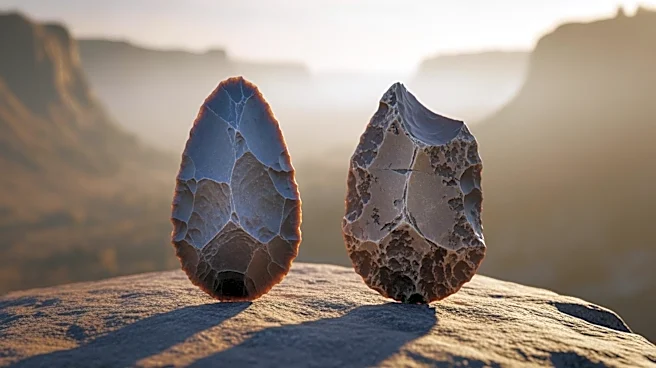
that these groups shared tools, cultural practices, and burial rituals, challenging previous notions of their separation. Excavations led by Prof. Yossi Zaidner, Prof. Israel Hershkovitz, and Dr. Marion Prévost have uncovered human burials and artifacts that suggest a complex relationship marked by cooperation and competition. The findings highlight the Levant as a significant crossroads in human history, where demographic expansion and climatic improvements facilitated intensified contact between different Homo taxa.
Why It's Important?
This discovery reshapes the understanding of early human interactions, suggesting that cultural and technological innovations were driven by collaboration rather than isolation. The evidence of shared rituals and symbolic behavior, such as the use of ochre, points to deeper social connections and the emergence of complex societies. These insights could influence current theories on human evolution, emphasizing the role of intergroup dynamics in shaping cultural progress. The study also underscores the importance of geographic factors in human development, as the Levant's environment fostered demographic growth and cultural exchange.
What's Next?
Further research at Tinshemet Cave is expected to provide more insights into the social lives and behaviors of early humans. Scientists anticipate discovering additional artifacts and burial sites that could deepen the understanding of how human society evolved. The ongoing study may also explore the extent of cooperation and competition between Neanderthals and Homo sapiens, potentially revealing new aspects of their interactions and cultural exchanges.
Beyond the Headlines
The findings from Tinshemet Cave raise intriguing questions about the ethical and cultural dimensions of early human societies. The use of ochre for decoration suggests a form of identity expression, hinting at early social hierarchies and group distinctions. The arrangement of burials and associated artifacts may reflect beliefs about the afterlife, offering a glimpse into the spiritual lives of ancient humans. These discoveries could lead to a reevaluation of the cultural significance of burial practices and symbolic behavior in human evolution.