



What's Happening?
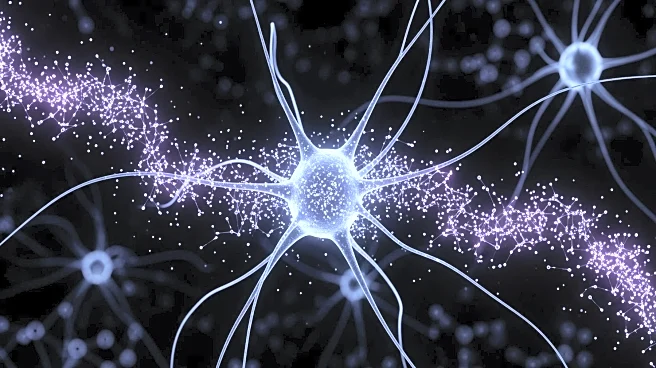
Recent research has highlighted the impact of SHANK3 deficiency on neuronal development, revealing significant structural and functional changes. SHANK3-mutated neurons exhibit reduced morphological complexity and a decrease in postsynaptic puncta density,
which is consistent with previous findings. This deficiency is linked to neuronal hyperexcitability, a paradoxical phenomenon that aligns with emerging models of neurodevelopmental disorders. The study utilized advanced imaging techniques to quantify neuronal network morphology, revealing that SHANK3 plays a crucial role in maintaining synaptic integrity. The research involved the use of induced pluripotent stem cells (iPSCs) and neural differentiation protocols to study the effects of SHANK3 mutations, providing insights into the molecular pathways shared with neurodegenerative conditions.
Why It's Important?
The findings from this study are significant as they provide a deeper understanding of the molecular mechanisms underlying neurodevelopmental disorders, particularly those associated with SHANK3 mutations. These insights could pave the way for developing targeted therapies for conditions like Phelan-McDermid Syndrome and other related disorders. By elucidating the role of SHANK3 in synaptic integrity and neuronal function, this research contributes to the broader field of neurodegeneration, potentially influencing future studies and treatment approaches. The study's use of iPSCs and advanced imaging techniques also highlights the importance of innovative methodologies in uncovering complex biological processes.