
What's Happening?
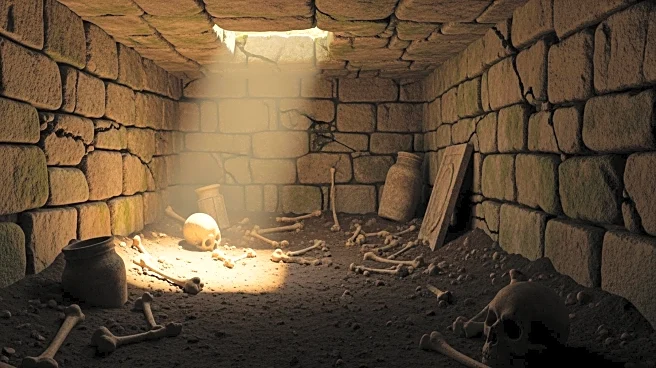
A significant archaeological excavation at the Tower of London has unearthed over 20 skeletal remains, marking the first such dig at the site in a generation. The excavation, initially a trial to prepare
for a new elevator at the Chapel Royal of St Peter ad Vincula, revealed two skeletons from around 1500. Further digging uncovered a group burial likely linked to the 1348 Black Death and three skeletons from the late 12th or early 13th centuries. These findings provide a rare glimpse into the medieval history of the Tower, which has served as a royal palace, prison, and site of the Royal Mint since its construction in the 1070s. The discovery includes rare artifacts such as a burial shroud, jewelry, and funerary incense pots, offering insights into the lives of those who lived and died at the Tower.
Why It's Important?
This excavation is crucial for understanding the historical and cultural significance of the Tower of London. The findings offer a unique opportunity to study the lives of medieval residents through biomolecular techniques like isotope analysis, which can reveal details about diet, health, and mobility. Such insights are invaluable for historians and archaeologists, as they help reconstruct the social and economic conditions of the time. The discovery of high-status burials near the chapel suggests the importance of the individuals interred there, potentially altering our understanding of the site's historical narrative. This research could also influence future archaeological methods and preservation strategies for historic sites.
What's Next?
The next steps involve detailed analysis of the skeletal remains and artifacts to build a comprehensive picture of the individuals' lives. Researchers will use advanced techniques to extract data from the remains, which could lead to new discoveries about the Tower's historical community. The findings may prompt further excavations at the site, potentially uncovering more about the Tower's past. Additionally, the results could influence public interest and educational programs related to the Tower of London, enhancing its role as a historical and cultural landmark.