
What's Happening?
Admiral Nicolas Vaujour of the French Navy has recently engaged in discussions with naval counterparts from several countries, including Britain, Germany, Italy, India, and Japan, regarding the current situation in the Middle East. These talks focused
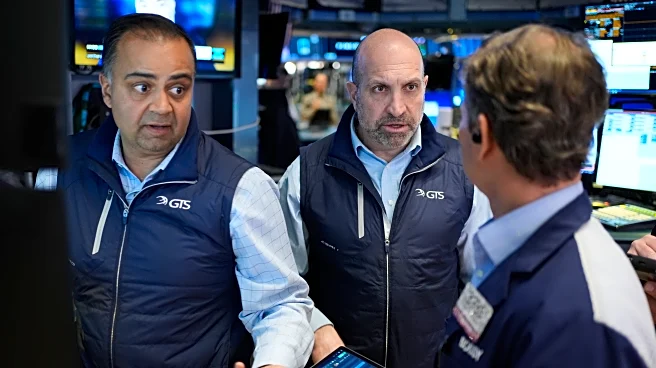
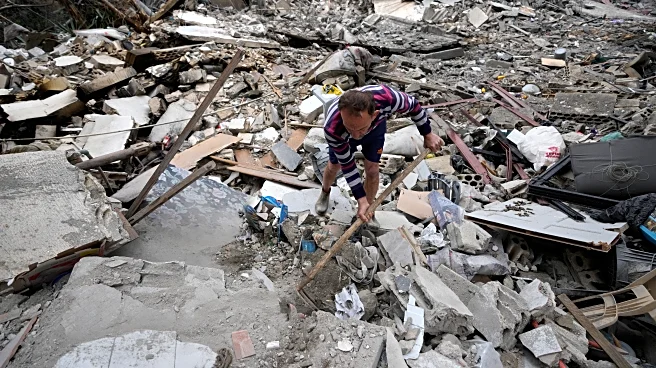
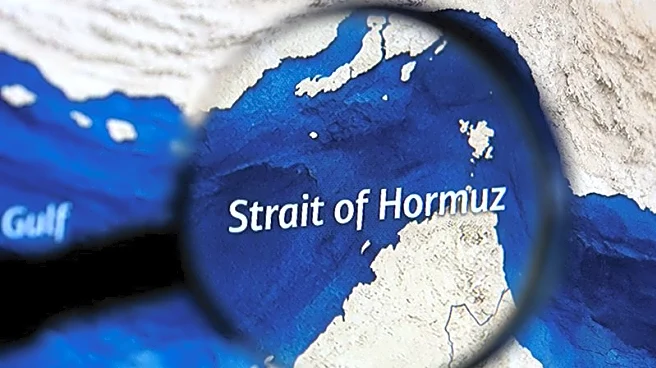
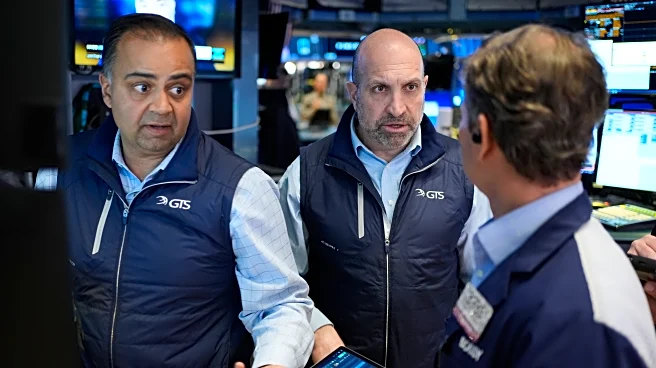
on maritime security and the freedom of navigation, which are crucial for global economic and regional stability. The discussions come in the wake of heightened tensions due to the U.S. and Israeli conflict with Iran, which has significantly impacted global financial markets and led to the closure of the Strait of Hormuz. This strait is a vital conduit for global oil and liquefied gas shipments. Admiral Vaujour's initiative follows a similar effort by France's Armed Forces Chief, Fabien Mandon, who plans to hold a videoconference with army chiefs from countries interested in restoring maritime traffic in the region.
Why It's Important?
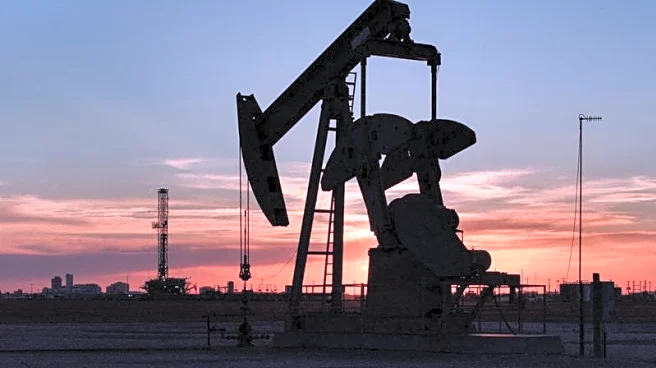
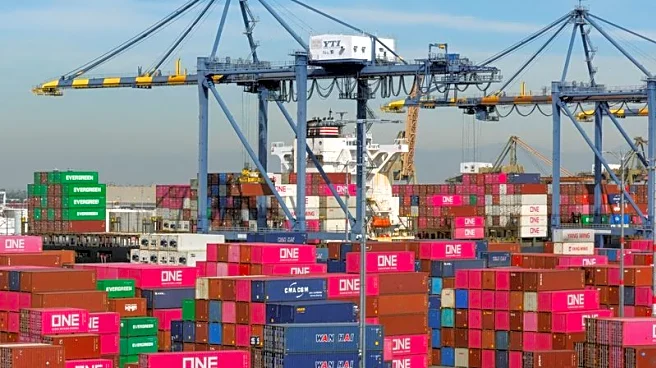
The closure of the Strait of Hormuz, a critical passage for a fifth of the world's oil shipments, underscores the strategic importance of maritime security in the Middle East. The ongoing conflict involving the U.S. and Iran has not only disrupted global oil supplies but also posed a threat to international economic stability. The talks led by Admiral Vaujour highlight the collaborative efforts needed to address these challenges and ensure the safe passage of goods through this vital waterway. The involvement of multiple countries in these discussions reflects the global stakes involved and the necessity for coordinated international action to mitigate the risks associated with regional conflicts.
What's Next?
The next steps involve continued diplomatic and military coordination among the involved nations to ensure the security of maritime routes in the Middle East. The planned videoconference by France's Armed Forces Chief, Fabien Mandon, with other army chiefs, aims to further these efforts by exploring joint strategies to reopen and secure the Strait of Hormuz. The outcome of these discussions could lead to increased naval presence in the region and potentially new international agreements on maritime security. Stakeholders, including global oil markets and regional governments, will be closely monitoring these developments for any signs of de-escalation or further conflict.