
What's Happening?
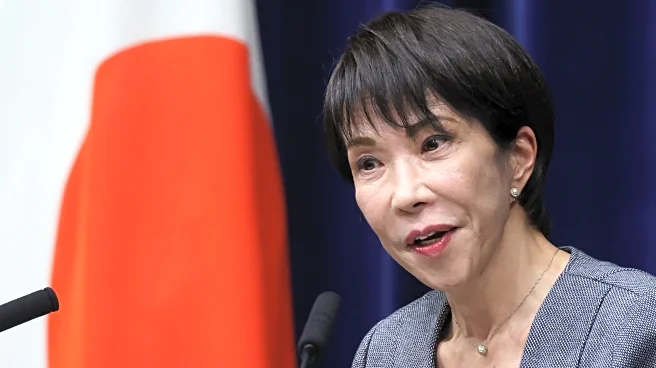
Japan's Prime Minister, Sanae Takaichi, along with approximately 60 female lawmakers, is advocating for an increase in the number of women's restrooms in the Japanese parliament building. This initiative
comes in response to the growing number of female representatives in the legislature, with a record 73 women elected to the 465-seat Lower House in October 2024. Currently, the parliament building, which was constructed in 1936, has only one female restroom with two cubicles near the plenary chamber, and a total of nine female restrooms with 22 cubicles throughout the building. In contrast, there are 12 men's restrooms with 67 stalls and urinals. The lack of adequate facilities has led to long queues and inconvenience for female lawmakers, staff, and visitors. The push for more restrooms is part of broader efforts to address gender disparities in public spaces and promote women's empowerment in Japan.
Why It's Important?
The call for more women's restrooms in Japan's parliament highlights ongoing gender equality issues within the country's political and public infrastructure. As the number of female lawmakers increases, the need for adequate facilities becomes more pressing, reflecting broader societal changes towards gender parity. This development is significant as it underscores the challenges women face in traditionally male-dominated spaces and the necessity for structural changes to accommodate a more diverse representation. The initiative aligns with Japan's broader goals of increasing female participation in leadership roles across various sectors, a target that has been delayed but remains a priority for the government. Successfully addressing these issues could set a precedent for other institutions in Japan and contribute to a more inclusive environment for women in politics and beyond.
What's Next?
The proposal for more women's restrooms in the parliament building is under consideration by the Chair of the Lower House committee, Yasukazu Hamada, who has expressed a willingness to address the issue. If approved, this could lead to renovations or expansions within the parliament building to accommodate the growing number of female lawmakers. Additionally, this initiative may prompt further discussions and actions regarding gender equality in other public and private sectors in Japan. The government's commitment to increasing female representation in leadership roles will likely continue to drive similar efforts to improve facilities and conditions for women across the country.
Beyond the Headlines
The push for more women's restrooms in Japan's parliament is not just about convenience; it reflects deeper cultural and societal shifts towards gender equality. The lack of adequate facilities is a tangible reminder of the historical underrepresentation of women in politics and public life. Addressing this issue could help normalize the presence of women in leadership roles and encourage more women to pursue careers in politics. Furthermore, it highlights the importance of infrastructure in supporting gender parity and the need for ongoing efforts to create inclusive environments that reflect the changing demographics of leadership in Japan.