



What's Happening?
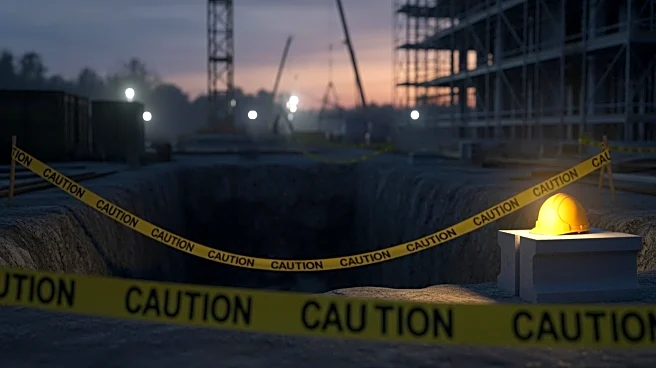
The death of Yuvraj Mehta, a 27-year-old Indian IT professional, has sparked outrage and raised significant concerns about urban planning and road safety in India. Mehta died after his car fell into an unmarked, waterlogged construction pit in Noida,
a suburb of Delhi. The incident occurred late at night when Mehta's vehicle hit a low boundary wall and plunged into the pit. Despite his efforts to call for help, Mehta drowned before rescue teams could reach him. The pit had been dug years ago, but construction was halted, leaving it unmarked and dangerous. Following the incident, protests erupted, demanding accountability from authorities. The Uttar Pradesh government has since removed a senior official from the township's governing authority and ordered an investigation. Police have arrested Abhay Kumar, one of the construction site's owners, on charges of culpable homicide due to negligence.
Why It's Important?
This incident highlights critical issues regarding infrastructure safety and governance in rapidly urbanizing areas. The tragedy underscores the potential dangers posed by neglected construction sites and inadequate urban planning, which can lead to fatal accidents. The public outcry and subsequent government actions reflect growing demands for accountability and improved safety measures. This case could prompt stricter regulations and oversight of construction projects, potentially leading to safer urban environments. The incident also raises awareness about the need for better emergency response capabilities, as timely intervention might have saved Mehta's life.
What's Next?
Further investigations are expected, with more arrests likely as authorities continue to probe the circumstances surrounding the incident. The case may lead to policy changes aimed at enhancing safety standards for construction sites and improving emergency response protocols. Public pressure could drive legislative reforms to prevent similar tragedies. The outcome of the investigation and any subsequent legal proceedings will be closely watched, as they may set precedents for handling negligence in urban development projects.