






What's Happening?
The City of Atlanta, in collaboration with the Atlanta Committee for Progress, has officially launched the Atlanta Neighborhood Collective, a new nonprofit organization. This initiative is designed to advance Mayor Andre Dickens’ Neighborhood Reinvestment
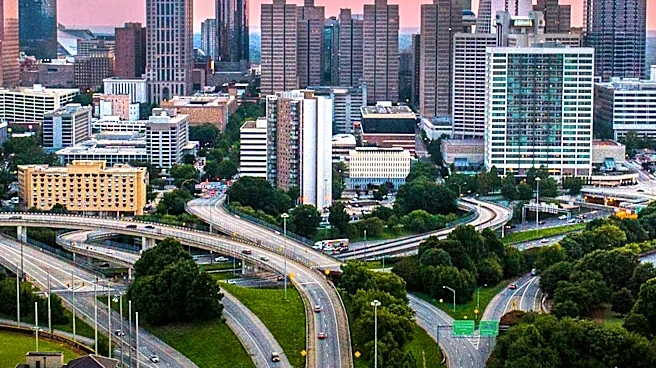
Initiative (NRI), which aims to improve opportunities and outcomes for children and families in historically disinvested neighborhoods. Donovan Lee-Sin has been appointed as the inaugural executive director of the Atlanta Neighborhood Collective, commencing his role on October 12. The Collective will focus on coordinating public, private, philanthropic, and community investments, while also ensuring active resident involvement in decisions that affect their neighborhoods. The NRI targets seven founding neighborhood areas: Thomasville Heights, English Avenue/Vine City, Grove Park/Bankhead, West Hollowell, East Campbellton, West Campbellton, and Downtown and Mechanicsville.
Why It's Important?
The establishment of the Atlanta Neighborhood Collective is a significant step towards addressing long-standing issues of disinvestment and inequality in Atlanta's neighborhoods. By creating a dedicated nonprofit, the city aims to streamline and amplify efforts to bring resources and community partners together, fostering sustainable development and economic mobility. This initiative is crucial for residents in these areas, as it seeks to break down barriers to resources and create pathways to better opportunities, particularly for children and families. The coordinated approach, involving various sectors, is expected to maximize the impact of investments and ensure that neighborhood priorities are translated into tangible progress. This model could serve as a blueprint for other cities grappling with similar challenges of urban inequality and neighborhood revitalization.
What's Next?
Donovan Lee-Sin will begin his role as the executive director of the Atlanta Neighborhood Collective on October 12, initiating the operational phase of the nonprofit. The Collective will immediately focus on coordinating strategies across the seven identified neighborhoods and implementing a strategic plan developed in collaboration with nonprofit partner organizations and the city. This will involve engaging with local partners such as Atlanta Downtown, Focused Community Strategies, Grove Park Foundation, West Hollowell Foundation, and Westside Future Fund. The initiative will also work to secure and manage funding, including philanthropic investments and potentially funds from the city's tax allocation districts. The long-term goal is to expand economic mobility and support neighborhood-led solutions, with ongoing efforts to keep residents involved in the decision-making processes.
Beyond the Headlines
The launch of the Atlanta Neighborhood Collective represents more than just a new organizational structure; it embodies a philosophical shift towards community-centric development and equitable urban growth. By focusing on historically disinvested neighborhoods, the initiative acknowledges and seeks to rectify past systemic inequalities. The emphasis on resident involvement is particularly noteworthy, as it empowers local communities to shape their own futures, moving beyond top-down approaches. This collaborative model, integrating public, private, and philanthropic efforts, could foster a more resilient and interconnected city. The success of this initiative could redefine how urban revitalization is approached, highlighting the importance of holistic development that addresses social, economic, and environmental factors to create truly thriving neighborhoods.