





What's Happening?
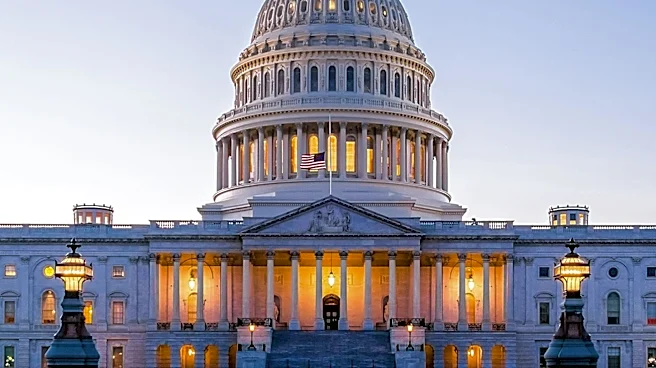
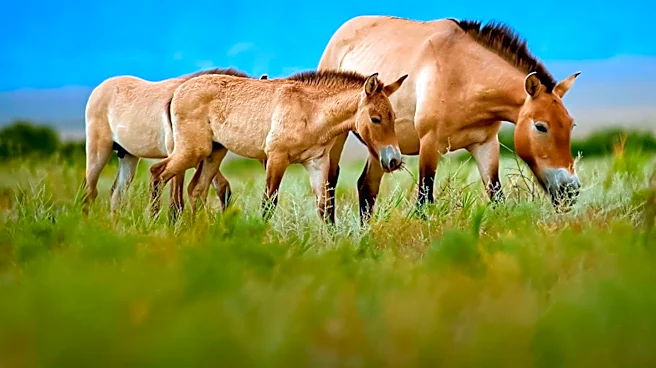
Democratic Rep. Dina Titus is leading efforts in Congress to establish federal protections and ensure more humane treatment for wild mustangs and burros. Her home state of Nevada hosts the largest wild horse population in the country, and she chairs the bipartisan
Congressional Wild Horse Caucus. Titus and advocates, including Joanna Grossman, equine program director at the Animal Welfare Institute, highlight the long-standing issue of inhumane practices, particularly the use of helicopters for roundups. Titus describes these roundups as horrifying, citing instances of foals being chased and injured. She has introduced a bill, nicknamed 'Save a horse, hire a cowboy,' aimed at addressing the perceived monopoly of a few helicopter companies involved in these contracts. Additionally, Titus advocates for reproductive methods, such as the immunocontraceptive vaccine PZP, as an alternative to roundups. The current system has led to a buildup of horses in off-range facilities, with many adopted horses reportedly ending up in slaughter pipelines, despite congressional safeguards in spending bills to prevent federal funds from being used for this purpose. President Trump's budget requests for fiscal years 2026 and 2027 omitted this protective language, though lawmakers have historically reinstated it.
Why It's Important?
The push for federal protections for wild mustangs and burros carries significant implications for animal welfare, federal land management, and the U.S. economy. The current practices, particularly helicopter roundups and the alleged 'slaughter pipeline,' raise ethical concerns about the treatment of these iconic American animals. If Rep. Titus's proposed legislation, including her 'Save a horse, hire a cowboy' bill and advocacy for immunocontraceptive vaccines, gains traction, it could fundamentally alter how wild horse populations are managed. This shift would impact the Bureau of Land Management (BLM), potentially requiring a reallocation of resources towards fertility control rather than costly and controversial roundups. Economically, breaking the 'monopoly' of helicopter companies could open up opportunities for other contractors or methods, while a permanent ban on equine slaughter for human consumption, as proposed in related legislation like the SAFE Act, would affect the horse industry and international trade. The debate also highlights the ongoing tension between conservation efforts, animal rights, and the economic interests tied to land use and animal management in the American West. The outcome will determine the future welfare of thousands of wild horses and burros and set a precedent for federal animal protection policies.
What's Next?
Lawmakers are exploring various legislative avenues to advance protections for wild mustangs and burros. Rep. Titus and advocates are pushing for changes to address both the slaughter pipeline and the methods of rounding up and treating these animals. An amendment co-sponsored by Titus and Rep. Jeff Van Drew, which aligns with many of these goals, was added to the House's surface transportation reauthorization bill. There is anticipation that this bill might be considered during the lame-duck session after the November midterms, though its passage through the Senate, which involves multiple committees, remains uncertain. The stopgap funding measure that recently passed the House extends current surface transportation program authorities into December, suggesting that a full resolution might be deferred to the next term, depending on election outcomes. Advocates are also urging the BLM to dedicate a larger portion of its Wild Horse and Burro Program budget, specifically 10%, to humane fertility control efforts like the PZP vaccine. The ongoing public outcry and media attention, such as recent reporting from The New York Times, are expected to maintain pressure on Congress and the BLM to implement more effective and humane management strategies.
Beyond the Headlines
The debate surrounding wild mustangs and burros extends beyond immediate legislative actions, touching upon deeper cultural, ethical, and environmental considerations. These animals are often seen as symbols of American freedom and the untamed West, making their treatment a matter of national identity. The current management practices, particularly the reliance on helicopter roundups and the alleged 'slaughter pipeline,' raise fundamental questions about human responsibility towards wildlife and the ethical boundaries of animal management. The push for immunocontraceptive vaccines like PZP represents a shift towards more scientific and less invasive population control methods, potentially setting a precedent for wildlife management across other species. Furthermore, the issue highlights the complexities of federal land management, balancing ecological concerns, historical preservation, and the economic interests of various stakeholders. The long-term implications could include a re-evaluation of the Wild Free-Roaming Horses and Burros Act of 1971, leading to more comprehensive and humane federal policies that reflect evolving societal values regarding animal welfare and environmental stewardship. The discussion also underscores the influence of media reporting in galvanizing public opinion and prompting legislative action on seemingly niche issues.