








What's Happening?
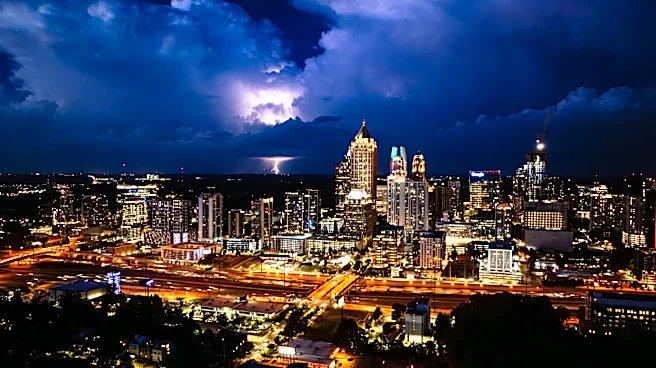
In Atlanta, a substantially gutted skyscraper in Midtown, formerly BellSouth's headquarters, has become a significant concern for local residents and city officials. The building, now a mere shell, has been left in disrepair, leading to safety and aesthetic
issues in the area. Residents have expressed frustration over the building's condition, describing it as an eyesore with uneven sidewalks and neglected trees. In response, the Atlanta City Council is considering imposing a blight tax on the property owner. This tax could increase the property's taxes from $91,000 to $2.1 million, aiming to incentivize the owner to address the building's condition. The council is set to vote on this measure, which is part of a broader effort to tackle neglected properties in the city.
Why It's Important?
The potential imposition of a blight tax on the Midtown tower highlights the challenges cities face in managing urban decay and maintaining property standards. For Atlanta, this move could set a precedent for how the city deals with other neglected properties, potentially leading to improved urban environments and increased property values. The decision also reflects broader urban policy trends where cities are leveraging financial penalties to encourage property maintenance and development. If successful, this approach could benefit local communities by reducing blight and enhancing neighborhood safety and aesthetics. However, it also raises questions about the effectiveness of such taxes in compelling property owners to act and the potential financial burden on those owners.
What's Next?
The Atlanta City Council's vote on the blight tax is scheduled for Monday. If passed, the tax will significantly increase the financial pressure on the building's owner to address the property's condition. However, enforcement of the tax will depend on the city's executive branch, and there is skepticism among residents about whether the owner will comply. The outcome of this vote could influence future city policies on property management and urban renewal. Stakeholders, including local residents, city officials, and property developers, will be closely watching the council's decision and its implications for urban development in Atlanta.