





What's Happening?
A historic preservation group, the National Trust for Historic Preservation, has petitioned the U.S. Supreme Court to suspend the ongoing construction of a ballroom at the White House. This request comes after the Trump administration sought the Supreme Court's
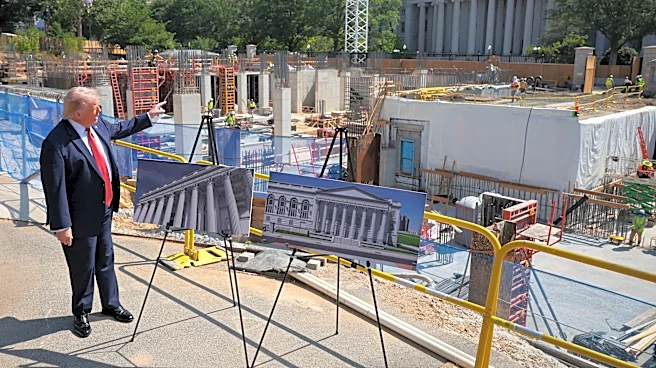
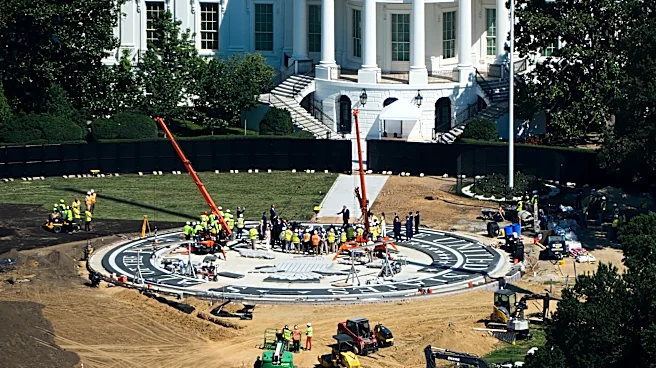
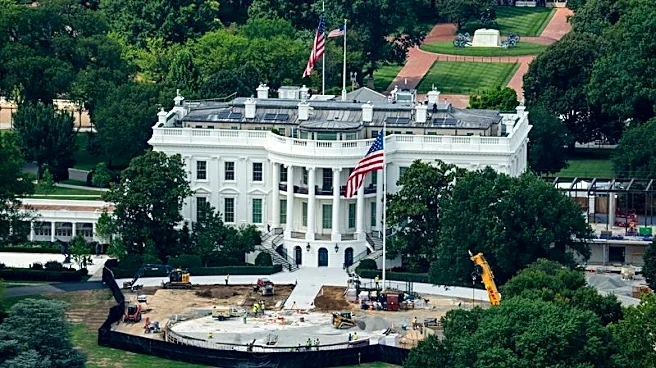
intervention to allow the project to continue during the appeals process. The preservation group argues that the administration is attempting to bypass judicial review and congressional approval, which they claim is legally required for such a project. They assert that no statute grants the President the authority to demolish a significant portion of the White House's East Wing for a privately funded ballroom. The administration, however, maintains that the President has unimpeded authority over White House renovations and that the project, which includes an underground military facility, is crucial for national security. The ballroom construction has been underway for 10 months and is reportedly 65% complete. A lower court order to pause above-ground construction was upheld by a divided appeals court panel, but that ruling was suspended to allow for the administration's appeal to the Supreme Court.
Why It's Important?
This legal battle highlights a significant constitutional and administrative dispute regarding presidential authority over federal property, particularly a historic landmark like the White House. The outcome will set a precedent for future presidential administrations concerning the scope of their power to undertake major construction projects without explicit congressional approval or extensive judicial oversight. For historic preservation advocates, this case is crucial in affirming the legal protections for national heritage sites against potentially unilateral executive actions. Conversely, the administration's argument emphasizes national security concerns and the need for executive flexibility in maintaining critical infrastructure. The dispute also raises questions about the balance of power between the executive, legislative, and judicial branches, and how far each can extend its influence over matters of national property and security. A ruling in favor of the preservation group could empower similar organizations to challenge government projects, while a ruling for the administration could broaden presidential powers in property management.
What's Next?
The Supreme Court is expected to consider the National Trust for Historic Preservation's request to suspend the White House ballroom project. Chief Justice John Roberts had set a deadline for the trust to respond to the administration's petition. The Solicitor General, D. John Sauer, representing the administration, has urged the Supreme Court to rule on its stay petition before the appeals court panel's decision to pause construction takes effect. The immediate next step will be the Supreme Court's decision on whether to grant the suspension, which would temporarily halt construction while the legal arguments are fully heard. Regardless of the immediate decision, the case is likely to proceed through further appeals, potentially leading to a definitive ruling on the extent of presidential authority in renovating the White House and the role of historic preservation laws in such projects. Stakeholders, including legal experts, historic preservationists, and government officials, will closely monitor the Supreme Court's actions and subsequent legal proceedings.
Beyond the Headlines
Beyond the immediate legal and construction implications, this case delves into the philosophical underpinnings of national heritage and executive power. The White House is not merely a residence or an office; it is a symbol of American democracy and history. The debate over its alteration touches upon how society values and protects its historical assets against contemporary needs or desires. The administration's argument for national security, juxtaposed with the preservation group's call for adherence to legal processes and historical integrity, reflects a broader tension in governance: the balance between expediency and due process, and between security and cultural preservation. This case could influence how future large-scale government projects are conceived and executed, potentially leading to more stringent requirements for environmental and historical impact assessments, or, conversely, reinforcing executive prerogative in matters deemed critical to national interest. It also highlights the ongoing role of non-governmental organizations in holding governmental bodies accountable.