




What's Happening?
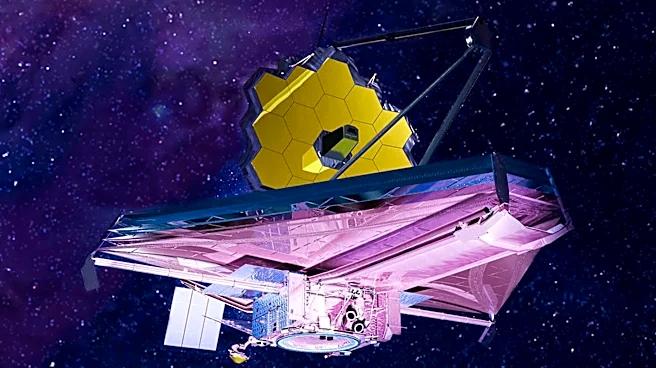
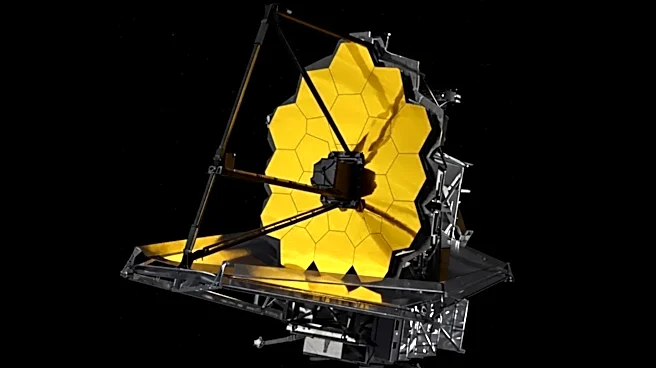
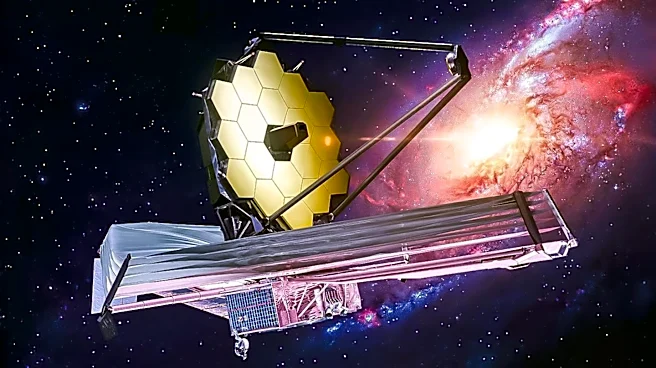
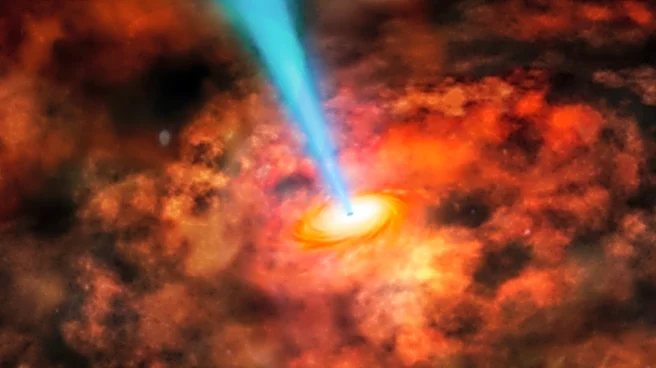
Astronomers utilizing the James Webb Space Telescope have observed gas clouds orbiting Sagittarius A*, the supermassive black hole at the center of the Milky Way galaxy. These new observations indicate that the gas clouds are enriched with metals, which
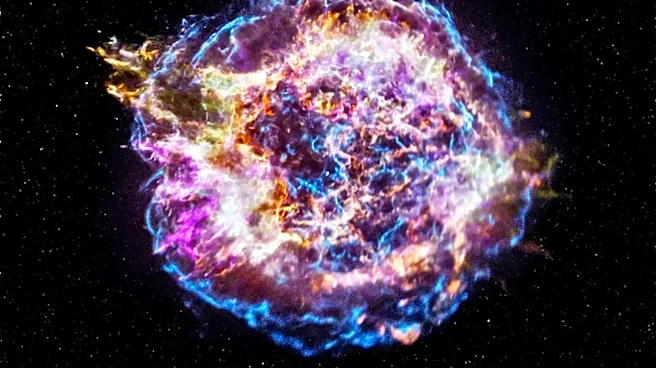
are elements heavier than hydrogen and helium, including carbon, oxygen, iron, and gold. This enrichment is believed to be a result of explosions from multiple generations of stars. While Sagittarius A* draws in matter, it does so at a slower rate and consumes less material compared to other supermassive black holes. Scientists are studying the properties of the surrounding material, such as gas, dust, and stars, to understand this behavior. Nicole Ford, a graduate student at McGill University, and her team analyzed infrared radiation data from the James Webb Space Telescope to determine the precise metal composition of these gas clouds.
Why It's Important?
The discovery of a metal-rich cloud around the Milky Way's central black hole provides crucial insights into the evolutionary processes of galaxies and supermassive black holes. The presence of heavy elements suggests a history of intense stellar activity and supernovae in the galactic center, which are vital for the formation of new stars and planetary systems. Understanding the composition of these gas clouds helps scientists model how black holes interact with their environments and how they grow. The relatively slow consumption rate of Sagittarius A* compared to other supermassive black holes poses a significant astrophysical puzzle, and these observations contribute to solving it by characterizing the available material. This research also highlights the advanced capabilities of the James Webb Space Telescope in providing unprecedented spectral and spatial resolution for astronomical studies.
What's Next?
Future research will involve comparing these new observations with simulations that model the evolution of gas over longer timescales to better understand how the black hole draws in matter. A companion study, led by McGill University astronomer Mayura Balakrishnan, investigated traces of past energetic outbursts from Sagittarius A*. While local conditions strongly influence gas emissions, making it difficult to isolate the black hole's direct effects, this does not rule out previous outbursts. Further studies will aim to refine these models and potentially uncover more about the black hole's history and its impact on the surrounding galactic environment. Continued use of advanced telescopes like the James Webb will be essential for gathering more detailed data to support these investigations.
Beyond the Headlines
The metal enrichment observed around Sagittarius A* has broader implications for our understanding of cosmic element distribution and the conditions necessary for life. The heavy elements found in these gas clouds are the building blocks of planets, including Earth. This suggests that the galactic center, despite its extreme environment, has been a site of significant chemical evolution. The ongoing study of black holes and their surrounding matter also touches upon fundamental questions about gravity, spacetime, and the ultimate fate of matter in the universe. The challenges in isolating the black hole's effects from local conditions underscore the complexity of astrophysical phenomena and the need for sophisticated observational and theoretical approaches to unravel these cosmic mysteries.