What's Happening?
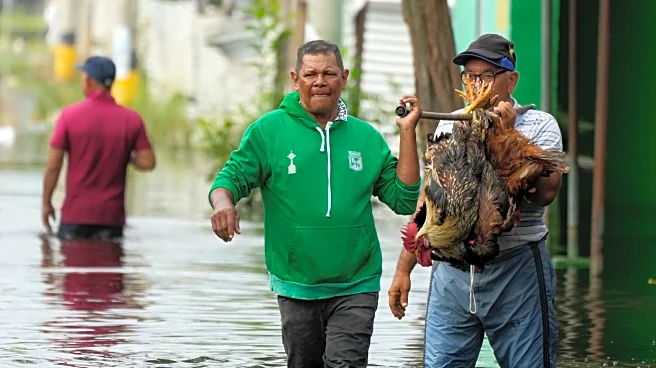
Heavy rains have caused severe flooding in Gaza, resulting in the deaths of 12 individuals and displacing thousands. The flooding has exacerbated existing challenges in the region, where shelters are overwhelmed,
and health risks are rising. Israel has stated that it is fulfilling its obligations but has accused various agencies of inefficiency and failing to prevent theft by Hamas, a claim that Hamas denies. The situation highlights the ongoing humanitarian challenges in Gaza, where infrastructure is often inadequate to handle such natural disasters.
Why It's Important?
The flooding in Gaza underscores the fragile humanitarian situation in the region, where infrastructure and resources are already stretched thin. The deaths and displacement add to the ongoing struggles faced by the population, including health risks from inadequate shelter and sanitation. The accusations between Israel and agencies regarding inefficiency and theft highlight the complex political and logistical challenges in providing aid and support to Gaza. This situation could further strain relations and complicate efforts to address the humanitarian needs of the Gazan population.
What's Next?
The immediate focus will likely be on providing emergency relief to those affected by the flooding, including shelter, food, and medical care. Long-term solutions will require addressing the underlying infrastructure issues and improving coordination among international agencies, Israel, and local authorities. The international community may increase pressure on all parties to ensure efficient and transparent aid distribution. Additionally, there may be calls for renewed diplomatic efforts to address the broader political and humanitarian issues in Gaza.
Beyond the Headlines
The flooding in Gaza highlights the broader implications of climate change and inadequate infrastructure in conflict zones. As extreme weather events become more frequent, regions like Gaza, with limited resources and ongoing political conflicts, are particularly vulnerable. This situation may prompt discussions on the need for sustainable development and climate resilience in conflict-affected areas. Furthermore, the political dynamics between Israel, Hamas, and international agencies could influence future humanitarian and peace-building efforts in the region.