






What's Happening?
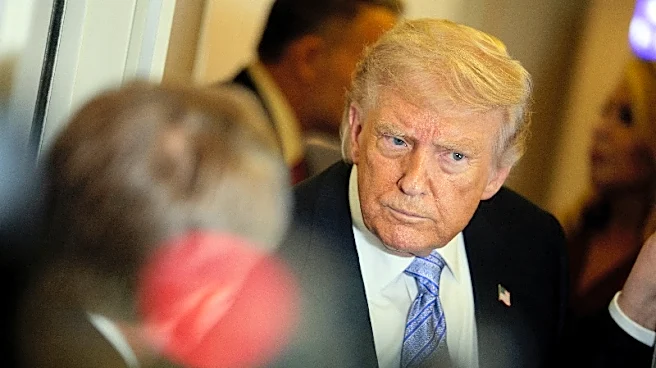
US President Donald Trump has expressed opposition to Taiwan's push for independence from China after a two-day summit with Chinese President Xi Jinping in Beijing. Trump stated that he is not seeking Taiwan's independence and emphasized the importance
of cooling tensions between the US and China. Despite the lack of formal diplomatic ties, the US remains a crucial supporter of Taiwan, which China claims as its territory. Trump noted that US policy towards Taiwan has not changed and highlighted the ongoing nature of the situation. The summit included discussions on Taiwan, but Trump did not specify whether the US would defend the island.
Why It's Important?
The US's stance on Taiwan is significant due to its implications for international relations and regional stability. Taiwan is a democratically governed island that China considers part of its territory, and any shift in US policy could escalate tensions. The US's continued support for Taiwan, including arms sales, serves as a deterrent against regional threats. Trump's comments reflect a desire to maintain the status quo and avoid conflict with China. The situation underscores the delicate balance the US must maintain in its foreign policy, particularly in the Asia-Pacific region.
What's Next?
Following the summit, President Trump indicated that he would soon decide on future arms sales to Taiwan, a move that could impact US-China relations. Taiwan's government has emphasized the importance of these sales for its security. The US's decision on arms sales will be closely watched by international stakeholders, as it could influence the balance of power in the region. Additionally, the US's approach to Taiwan will continue to be a critical factor in its broader strategy towards China.