






What's Happening?
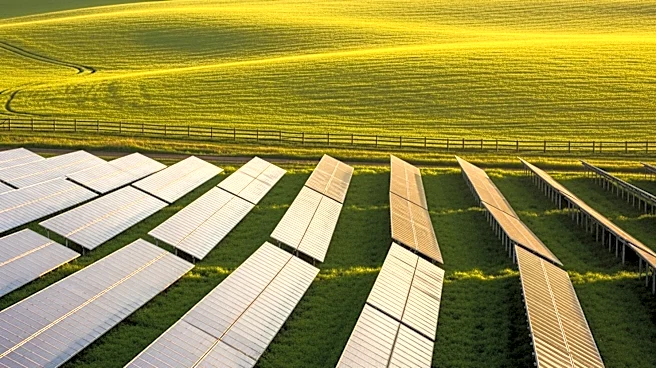
Amid rising input costs and fluctuating commodity prices, American farmers are increasingly adopting solar energy to stabilize their income and maintain their farms. Solar panels offer a reliable source of revenue that is not dependent on weather or market
conditions. However, some local governments are imposing restrictions on solar development on farmland, limiting farmers' ability to adapt to economic changes. In states like Oklahoma, Texas, and California, solar energy is providing financial stability and supporting rural economies. Despite its benefits, solar development faces opposition from local officials, who argue it could impact land use.
Why It's Important?
The adoption of solar energy by farmers is a critical step towards sustainable agriculture and energy independence. By integrating solar power, farmers can reduce their reliance on traditional energy sources and mitigate the financial risks associated with farming. This shift supports environmental conservation efforts and contributes to the resilience of rural communities. However, local restrictions on solar development could hinder these benefits, highlighting the need for policies that empower farmers to make decisions about their land use. The debate over solar energy reflects broader tensions between economic development and environmental stewardship.
Beyond the Headlines
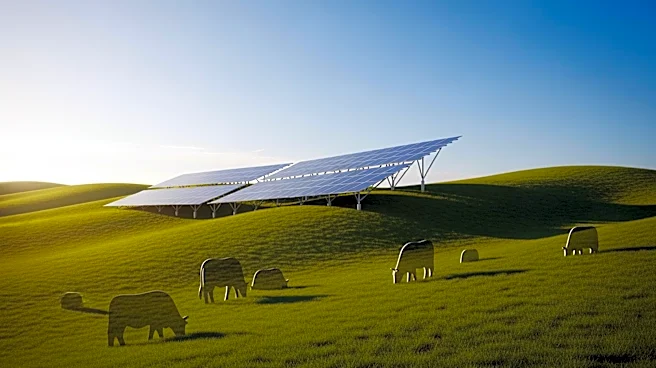
The resistance to solar development on farmland raises questions about land use priorities and the role of government in regulating agricultural practices. As farmers seek to diversify their income sources, balancing economic growth with environmental protection will be crucial. The concept of agrivoltaics, which combines solar energy with traditional farming, offers a potential solution by maximizing land use efficiency. This approach could pave the way for innovative agricultural practices that align with sustainability goals, fostering a more resilient and adaptable farming sector.