




What's Happening?
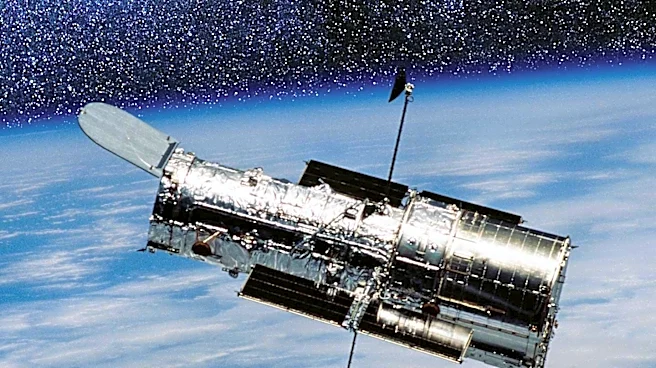
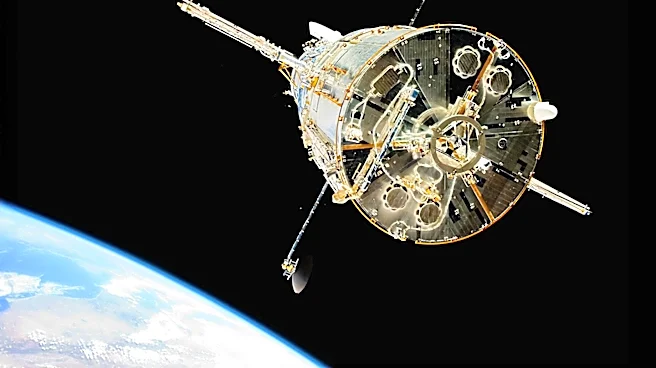
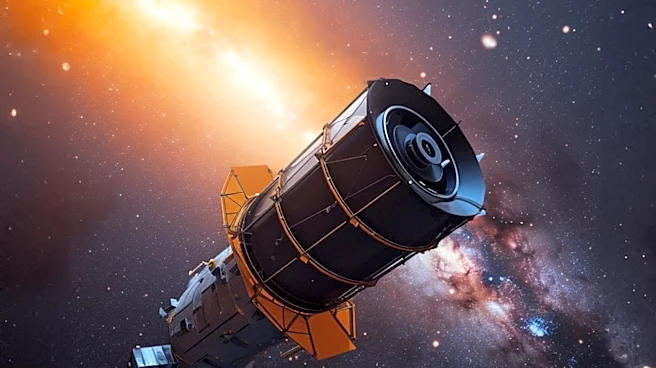
The European Space Agency's (ESA) Euclid space telescope, with contributions from NASA, has made a groundbreaking discovery by identifying 31 of the oldest quasars ever documented. Among these, two quasars are the oldest ever observed, dating back to
the universe's infancy, when it was merely 5% of its current age. Quasars are formed when immense amounts of gas and dust spiral into a supermassive black hole, generating extreme gravitational and frictional forces that heat the material to millions of degrees, resulting in a brilliant luminosity. These ancient quasars, some of which formed during the universe's first 670 million years, have taken approximately 13 billion light-years to reach Earth. The Euclid mission aims to image billions of galaxies to enhance the understanding of 'dark energy,' a phenomenon causing the universe to expand at an accelerating rate.
Why It's Important?
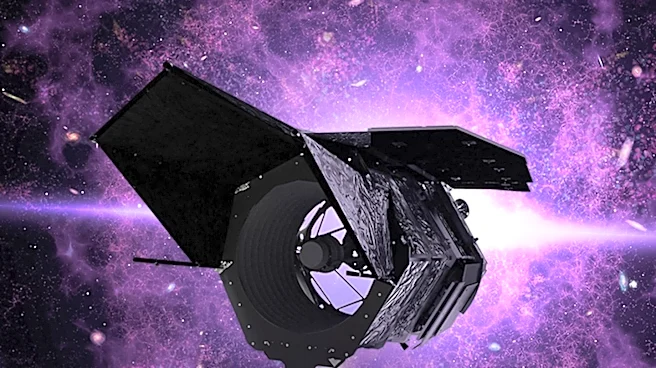
The discovery of these ancient quasars is significant as it provides astronomers with valuable insights into the formation of the earliest galaxies and black holes. Understanding these early cosmic structures is crucial for comprehending the evolution of the universe. The Euclid mission's findings will also contribute to the study of dark energy, a mysterious force driving the accelerated expansion of the universe. This research is expected to inform future missions, such as NASA's upcoming Nancy Grace Roman Space Telescope, which will further explore the nature of dark energy. The ability to observe such distant quasars allows scientists to piece together the history of the universe and the role of black holes in galaxy formation.
What's Next?
The Euclid mission will continue to image billions of galaxies, providing a wealth of data for astronomers to analyze. This ongoing research will help refine models of cosmic evolution and improve the understanding of dark energy. The findings from Euclid will also guide the development and objectives of future space telescopes, such as the Nancy Grace Roman Space Telescope, which is set to launch in the coming years. As more data is collected, scientists anticipate uncovering further details about the early universe and the processes that shaped its development.