







What's Happening?
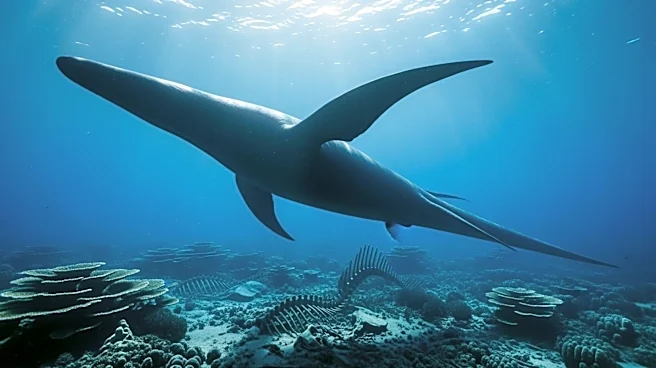
Scientists have identified a new species of mosasaur, Tylosaurus rex, from fossils found in northern Texas. This massive marine reptile, which lived about 80 million years ago, was one of the largest and most aggressive of its kind. The discovery was made
by researchers from the American Museum of Natural History, Dallas' Perot Museum of Nature and Science, and Southern Methodist University. The findings suggest that some museum specimens may have been misclassified, prompting a reevaluation of existing collections.
Why It's Important?
The identification of Tylosaurus rex provides new insights into the diversity and evolution of marine reptiles during the Cretaceous period. This discovery highlights the scientific value of regional fossil sites and the potential for reexamining historical collections to uncover new species. Understanding the characteristics and behaviors of ancient predators like T. rex can inform studies on marine ecosystems and evolutionary biology. The research also underscores the importance of accurate classification in paleontology.