



What's Happening?
An international research team, led by scientists from the Center for Molecular Biology of Heidelberg University, has made significant discoveries regarding the nascent polypeptide-associated complex (NAC) and its role in protein synthesis. The study,
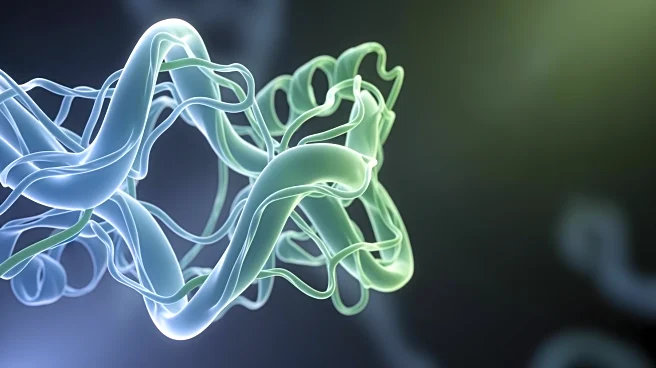
published in Molecular Cell, reveals that NAC is crucial in the early stages of protein folding, a process essential for the formation of functional proteins. The NAC complex binds to nascent protein chains produced by the ribosome, initiating their folding into three-dimensional structures. This process is vital as incorrect folding can lead to serious illnesses, including neurodegenerative diseases like Alzheimer's and Parkinson's. The research highlights that NAC interacts with a large fraction of nascent proteins, ensuring correct folding and preventing defects.
Why It's Important?
The findings have significant implications for understanding cellular mechanisms that prevent protein misfolding, a factor in many diseases. By elucidating the role of NAC in protein synthesis, the research provides insights that could lead to new therapeutic strategies for conditions caused by protein misfolding. This understanding is crucial for developing interventions that could mitigate the effects of diseases like Alzheimer's and Parkinson's, which are linked to protein folding errors. The study also enhances the broader scientific understanding of protein synthesis, a fundamental biological process, potentially influencing future research in molecular biology and related fields.
What's Next?
Future research may focus on further exploring the mechanisms by which NAC influences protein folding and its potential applications in disease treatment. Scientists might investigate how manipulating NAC activity could prevent or correct protein misfolding in human cells. Additionally, the study opens avenues for developing drugs that target NAC or its pathways, offering potential new treatments for neurodegenerative diseases. Continued research in this area could also lead to advancements in biotechnology, where precise protein folding is critical for the production of therapeutic proteins.
Beyond the Headlines
The study underscores the complexity of protein synthesis and the intricate cellular mechanisms that ensure proteins fold correctly. It highlights the importance of molecular control centers like NAC in maintaining cellular health and preventing disease. The research also raises ethical considerations regarding the manipulation of protein synthesis processes, particularly in therapeutic contexts. As scientists gain more control over these processes, discussions about the implications of such interventions on human health and disease treatment will become increasingly important.