







What's Happening?
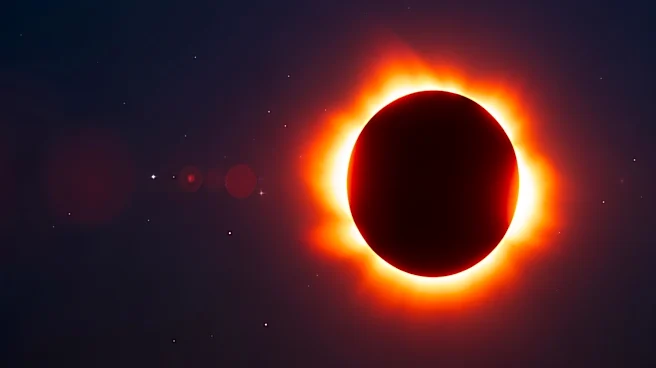
An annular solar eclipse is set to occur on February 6, 2027, creating a 'ring of fire' effect visible across a broad path that includes southern Chile, Argentina, and parts of West Africa. During this event, the moon will cover 93% of the sun's disk
at its peak, leaving a bright ring visible for nearly eight minutes, making it one of the longest annular solar eclipses of the decade. The eclipse will begin southwest of Easter Island in the Pacific Ocean and conclude in the Gulf of Guinea, West Africa. The path of annularity will cross several countries, including Chile, Argentina, Uruguay, Brazil, Côte d'Ivoire, Ghana, Togo, Benin, and Nigeria. Observers in these regions will witness the eclipse at different times of the day, with the best viewing conditions expected in Argentina due to favorable weather patterns.
Why It's Important?
This annular solar eclipse is significant due to its unusually long duration and the wide geographical area it will cover. Such events provide unique opportunities for scientific observation and public engagement with astronomy. The eclipse's path through multiple continents allows for diverse cultural experiences and potential tourism boosts in regions like Patagonia, known for its clear skies. Additionally, the event highlights the importance of safe solar viewing practices, as looking directly at the sun without proper protection can cause serious eye damage. The eclipse also serves as a reminder of the intricate celestial mechanics that govern our solar system, offering educational opportunities for schools and science enthusiasts.
What's Next?
As the date of the eclipse approaches, preparations will likely intensify in the regions along its path. Local governments and tourism boards may organize events and viewing parties to capitalize on the influx of eclipse chasers and tourists. Scientists and astronomers will prepare to conduct studies on the eclipse's effects on the atmosphere and other phenomena. Public awareness campaigns will be crucial to ensure safe viewing practices are followed. Additionally, weather forecasts will play a critical role in determining the best locations for viewing the eclipse, particularly in areas prone to cloud cover.
Beyond the Headlines
Beyond the immediate spectacle, the 2027 annular solar eclipse may have longer-term implications for scientific research and public interest in astronomy. The event could inspire future generations to pursue careers in science and technology, contributing to advancements in these fields. It also underscores the importance of international collaboration in scientific endeavors, as researchers from different countries may work together to study the eclipse. Furthermore, the eclipse could prompt discussions on environmental and atmospheric science, as researchers analyze data collected during the event to better understand Earth's climate and weather patterns.