



What's Happening?
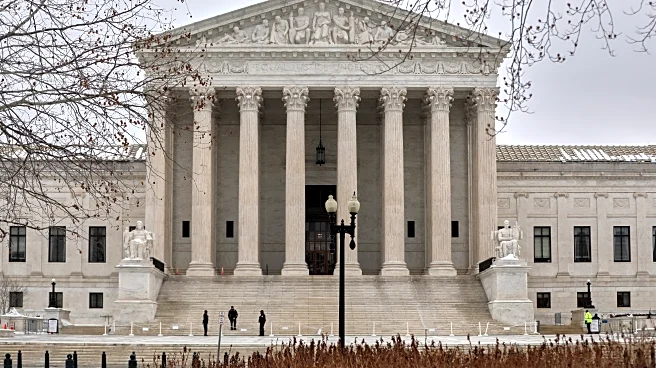
The Supreme Court has ruled against President Trump's use of the International Emergency Economic Powers Act (IEEPA) to impose tariffs, stating that the president does not have the authority to impose tariffs on imports from any country at any rate. The decision,
made in a 6-3 vote, is seen as a victory for constitutional separation of powers and the rule of law. Trump's April 2025 executive order had imposed tariffs on numerous countries, citing trade deficits and other issues. The ruling prevents the president from exercising near-unlimited tariff authority, which could have led to significant economic consequences.
Why It's Important?
The Supreme Court's decision reinforces the constitutional principle that tariff authority resides with Congress, not the president. This ruling protects American consumers and businesses from potentially harmful tariffs that could have increased costs and reduced economic growth. The decision also prevents the president from using tariffs as a tool for political leverage, ensuring that major economic decisions are subject to legislative oversight. The ruling is a significant check on executive power, preserving the balance of power between branches of government.
What's Next?
Following the ruling, President Trump may seek alternative legal avenues to impose tariffs, such as using other statutes like Section 232 and Section 301. However, these statutes have constraints that limit the president's ability to impose tariffs without congressional approval. The administration's attempts to reimpose tariffs will likely face legal challenges, and the Supreme Court's decision signals skepticism towards claims of sweeping executive tariff authority. Businesses affected by the previous tariffs may seek reimbursement, and the administration's response will be closely watched.
Beyond the Headlines
The ruling highlights the ongoing debate over executive power and its limits. It underscores the importance of maintaining checks and balances in government, particularly in economic policy. The decision may influence future administrations' approach to trade policy and executive authority. It also raises questions about the role of the judiciary in interpreting statutes related to economic powers. The ruling could have long-term implications for U.S. trade relations and the global economy, as it sets a precedent for limiting executive action in trade matters.