







What's Happening?
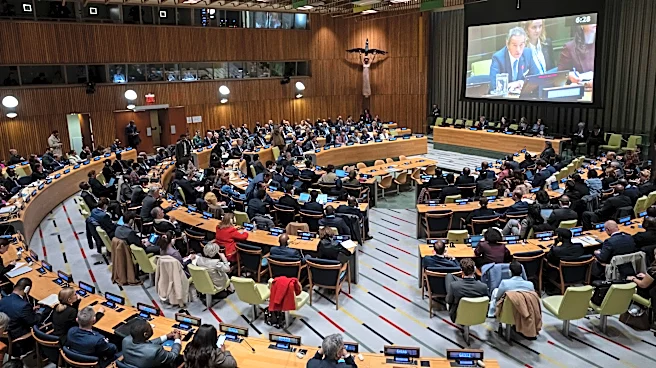
A significant climate summit took place in Colombia, where representatives from 57 nations gathered to discuss strategies for transitioning away from fossil fuels. This meeting, co-hosted by Colombia and the Netherlands, aimed to create national 'road
maps' for ending the production and use of fossil fuels. The summit was a response to the failure of a similar initiative at the COP 30 climate summit in Brazil. Notably, major carbon emitters like the United States, China, and Russia were not invited, as they were perceived to lack the necessary commitment to the cause. The summit emphasized practical discussions over negotiations, with a focus on moving away from fossil fuels, which are seen as unreliable due to their scarcity and susceptibility to market manipulation.
Why It's Important?
The summit in Colombia represents a pivotal moment in global climate policy, as it marks a shift from traditional UN climate negotiations to more focused discussions on fossil fuel reduction. The absence of major emitters highlights a divide in global climate policy, with some nations pushing forward while others remain tied to fossil fuel interests. The initiative could accelerate the transition to renewable energy, impacting global energy markets and potentially reducing reliance on fossil fuels. This shift is crucial for addressing climate change and could lead to significant economic and environmental benefits, particularly for countries that are part of the 'coalition of the willing'.
What's Next?
Following the summit, participating nations are expected to develop and implement their national road maps for reducing fossil fuel dependency. A follow-up conference is scheduled for February 2027 in Tuvalu, co-sponsored by Ireland, to assess progress and encourage further commitments. The success of these initiatives will depend on the willingness of more countries to join the effort and the implementation of policies that match the summit's rhetoric. The reaction of major emitters and fossil fuel producers will also be critical in determining the global impact of this movement.
Beyond the Headlines
The summit's focus on practical steps rather than negotiations could set a new precedent for international climate discussions. By excluding major emitters, the summit highlighted the growing divide between countries committed to climate action and those still reliant on fossil fuels. This could lead to a realignment of global alliances and economic strategies, as countries seek to reduce their carbon footprints and invest in renewable energy. The initiative also raises questions about the future of capitalism and its ability to adapt to a non-fossil fuel economy, as highlighted by Colombian President Gustavo Petro's remarks on the 'suicidal' model of current economic systems.