






What's Happening?
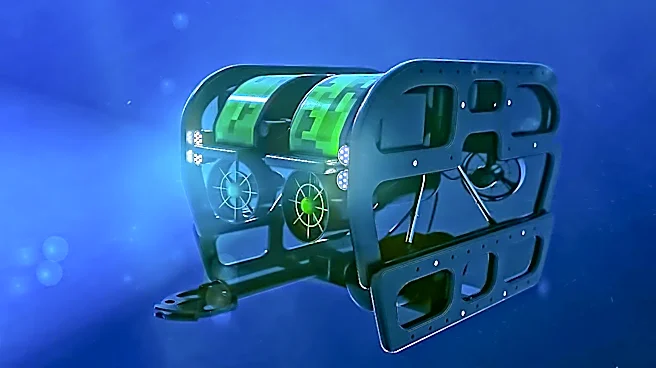
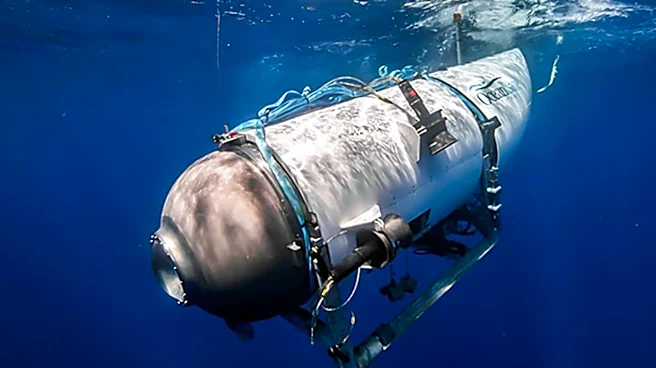
Raytheon, an RTX business, and Composite Energy Technologies (CET) have successfully demonstrated the Hadalus unmanned undersea vehicle (UUV) in a U.S. Navy test. The Hadalus UUV, designed for low-cost and long-endurance missions, showcased its submerged
launch and autonomous mission capabilities during a recent exercise on a Navy undersea test range. This marks a significant step in delivering autonomous undersea capabilities that are less detectable than surface platforms. The Hadalus UUV is a 34-foot vehicle with a six-foot cross-section and over 2,000 nautical miles of endurance, featuring a carbon-fiber exoskeleton for strength and payload capacity. The development from concept to prototype took less than 18 months, highlighting the rapid advancement in undersea technology.
Why It's Important?
The successful demonstration of the Hadalus UUV represents a significant advancement in undersea military technology, offering the U.S. Navy a cost-effective and efficient solution for undersea missions. This development could enhance the Navy's operational capabilities by providing a stealthier and more autonomous platform for various missions, potentially reducing the need for manned operations in dangerous environments. The collaboration between Raytheon and CET also underscores the importance of partnerships in accelerating technological innovation and deployment in defense sectors.
What's Next?
Following the successful test, the Hadalus UUV could see further development and integration into the U.S. Navy's operational fleet. The focus will likely be on refining its capabilities and expanding its operational roles. Stakeholders, including military leaders and defense contractors, may explore additional applications for the UUV, potentially leading to new contracts and collaborations. The success of this project could also influence future defense procurement strategies, emphasizing the need for rapid development cycles and cost-effective solutions.