










What's Happening?
Ministers from six member countries of the Alliance of Champions for Food Systems Transformation (ACF) informed the UN Biodiversity Conference (CBD COP17) in Yerevan, Armenia, that only 0.8% of climate finance currently reaches smallholder farmers. This
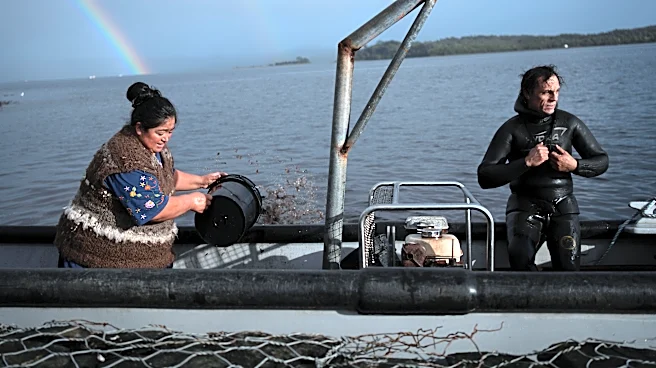
coalition, initially founded at COP28 in Dubai in 2023 by Brazil, Cambodia, Norway, Rwanda, and Sierra Leone, saw Italy and Vietnam join at the COP30 climate summit in Belém last November. The ministers emphasized that debt distress in climate-vulnerable nations and complex, bureaucratic processes are significant barriers preventing funds from reaching agricultural cooperatives, women's associations, and local communities. They called upon governments, financial institutions, and the private sector to increase investment in agroecology, agroforestry, land restoration, and the conservation of crop genetic diversity, advocating for accessible, predictable, and long-term funding. The statement also highlighted the launch of TERRA and RAIZ under the COP30 Action Agenda, initiatives aimed at expanding resilient and restorative agroecology and agroforestry.
Why It's Important?
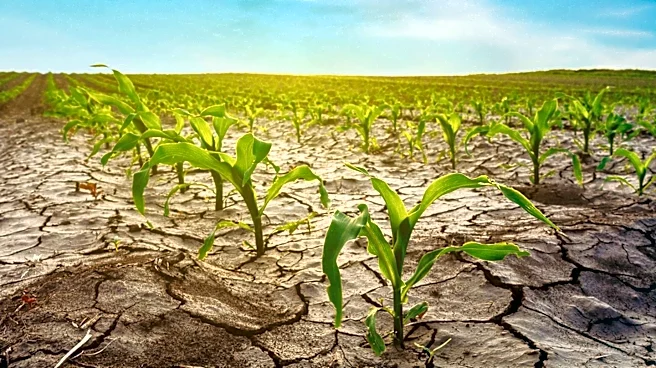
The revelation that a mere 0.8% of climate finance reaches smallholders is critical because these farmers are often on the front lines of climate change impacts and are crucial for global food security. Their ability to adopt sustainable practices like agroecology and agroforestry is severely hampered by a lack of financial support. This disparity undermines international climate goals and biodiversity conservation efforts, as agriculture is a major contributor to greenhouse gas emissions and biodiversity loss. The call for accessible and predictable funding over longer timescales addresses a fundamental flaw in current climate finance mechanisms, which often favor large-scale projects over community-level initiatives. By highlighting the bureaucratic hurdles and debt distress, the ministers are drawing attention to systemic issues that prevent effective climate action at the grassroots level. Increased investment in smallholders could lead to more resilient food systems, reduced deforestation, and enhanced biodiversity, directly impacting the livelihoods of millions and contributing to global environmental stability.
What's Next?
The ministers' statement at the UN Biodiversity Conference serves as a direct appeal to governments, financial institutions, and the private sector to re-evaluate and reform climate finance mechanisms. The immediate next steps involve these stakeholders considering the call for increased and more accessible investment in agroecology, agroforestry, land restoration, and crop genetic diversity. The emphasis on predictable and long-term funding suggests a need for policy changes and new financial instruments that can bypass current bureaucratic obstacles and debt issues. The continued development and implementation of initiatives like TERRA and RAIZ, launched under the COP30 Action Agenda, will be crucial in demonstrating effective models for channeling funds to smallholders. Future discussions at international climate and biodiversity summits are likely to revisit this issue, with pressure mounting for concrete commitments to bridge the funding gap for small-scale farmers and local communities.
Beyond the Headlines
The disproportionately low allocation of climate finance to smallholders exposes a deeper systemic issue within global climate governance: the disconnect between high-level policy commitments and on-the-ground implementation. This situation raises ethical questions about equity and justice in climate action, as those most vulnerable to climate change impacts and often possessing traditional ecological knowledge are the least supported. The focus on plant-based diets at COP30, as highlighted by ProVeg International's Belém Declaration, further underscores the need for a holistic approach that integrates dietary shifts with sustainable farming practices. If not addressed, this funding gap could exacerbate food insecurity, rural poverty, and environmental degradation, potentially leading to social unrest and increased migration. The long-term implication is a call for a fundamental re-imagining of climate finance, moving towards models that empower local communities and integrate traditional knowledge, rather than perpetuating top-down, often inaccessible, funding structures.