






What's Happening?
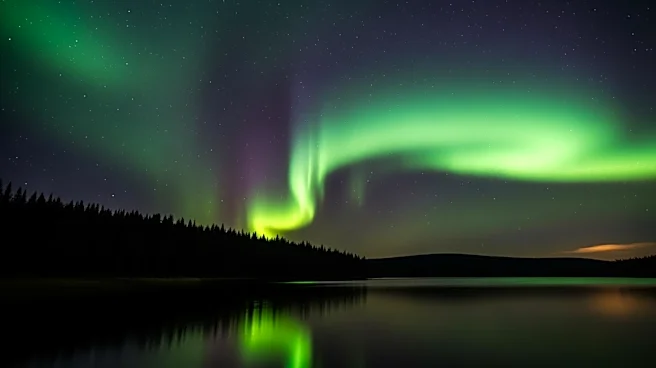
The National Oceanic and Atmospheric Administration (NOAA) has forecasted that the aurora borealis, commonly known as the northern lights, will be visible in parts of the northern United States, including Washington state. This phenomenon is expected
due to geomagnetic storms caused by a stream of fast solar winds emanating from a large hole in the sun's atmosphere. The peak visibility is anticipated between 8 to 11 p.m. on Thursday, May 14, with potential, albeit lighter, sightings on May 15. The northern lights are a result of energetic particles from the sun colliding with Earth's magnetic shield, creating colorful streaks in the atmosphere. Sky watchers are advised to seek locations far from city lights to enhance their chances of witnessing this natural spectacle.
Why It's Important?
The visibility of the northern lights in the United States, particularly in areas like Washington state, is a rare and captivating event that draws interest from both local residents and tourists. This occurrence not only provides a unique opportunity for sky watchers and photographers but also boosts local tourism as people travel to areas with minimal light pollution to experience the phenomenon. The event highlights the dynamic interactions between solar activity and Earth's magnetic field, offering educational insights into space weather and its effects on our planet. Additionally, it underscores the importance of monitoring solar activity and its potential impacts on Earth's atmosphere.
What's Next?
As the geomagnetic storms continue, NOAA and other space weather monitoring agencies will likely provide updates on the intensity and duration of the solar winds affecting Earth's atmosphere. Sky watchers and photographers will be on alert for any changes in visibility conditions, while local tourism sectors may see an increase in visitors seeking to experience the northern lights. The event may also prompt discussions on the broader implications of solar activity on Earth's environment and technology, including potential impacts on satellite operations and communication systems.