
What's Happening?
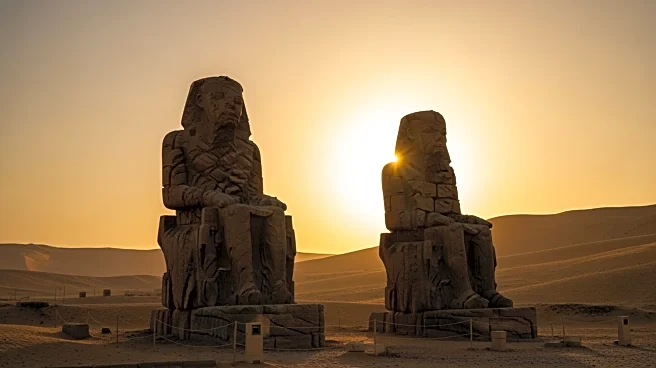
The Colossi of Memnon, monumental statues of Pharaoh Amenhotep III, have been restored and unveiled by Egypt's Ministry of Tourism and Antiquities. These statues, located at the entrance of Amenhotep III's
tomb in Luxor, have undergone extensive restoration efforts led by an international team. The restoration included cleaning, 3D scanning, and updating the statues with both original and new materials to ensure historical accuracy and durability. The site faced challenges due to fluctuating groundwater levels, but the restoration team, including the American Research Center, successfully stabilized the area. The project also uncovered nearly 300 additional sculptures and fragments, contributing to the site's historical richness.
Why It's Important?
The restoration of the Colossi of Memnon is a significant cultural achievement, enhancing Egypt's appeal as a major tourist destination. It reflects the collaborative efforts of international experts in preserving world heritage sites. The project not only restores a piece of ancient history but also boosts Egypt's tourism industry, which is vital for its economy. The unveiling of the restored statues is expected to attract more visitors to Luxor, promoting cultural tourism and economic growth. This restoration also highlights the importance of preserving historical sites against environmental and human-induced challenges.
What's Next?
Following the successful restoration of the Colossi, efforts will continue at Luxor to restore other significant sites, including the tomb of Ramses II and Queen Nefertari. These projects will further enhance the historical and cultural value of the area, potentially increasing tourist interest. The ongoing preservation work will require continued international collaboration and funding. As these sites open to the public, they will likely become focal points for educational and cultural exchange, fostering a deeper understanding of ancient Egyptian civilization.