





What's Happening?
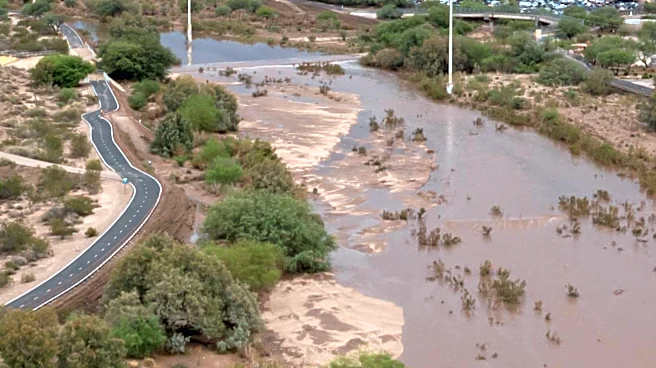
The U.S. federal government is set to implement a new plan requiring California, Arizona, and Nevada to reduce their water usage from the Colorado River by 16 to 20% through 2028. This decision comes as the river's reservoirs, Lake Powell and Lake Mead,
have reached historic lows due to prolonged drought conditions exacerbated by climate change. The Colorado River, a crucial water source for 40 million people and 5 million acres of farmland, has been shrinking over the past 25 years. The new federal plan follows unsuccessful negotiations among the seven basin states to reach a consensus on water sharing. The U.S. Bureau of Reclamation has published a 10-year operating framework, which will guide the water cuts, aiming to address the ongoing water crisis.
Why It's Important?
The mandated water cuts are significant as they impact the water supply for millions of people and vast agricultural areas in the Southwest. The Colorado River is vital for electricity generation and irrigation, and its depletion poses a threat to regional economies and ecosystems. The plan highlights the urgent need for sustainable water management in the face of climate change. The cuts could lead to economic challenges, particularly for Arizona, which faces the steepest reductions due to historical agreements. The situation underscores the broader issue of water scarcity in the western U.S., necessitating long-term solutions and cooperation among states to ensure water security.
What's Next?
The federal plan allows for continued negotiations among the basin states, with the possibility of a new agreement that could replace the current framework. The first specific operating plans under the new framework are expected soon, detailing the exact water cuts required. As the water crisis deepens, there is potential for legal disputes, particularly from Arizona, which may challenge the cuts in court. The situation calls for innovative water management strategies and increased collaboration to address the challenges posed by climate change and ensure the sustainability of the Colorado River.