





What's Happening?
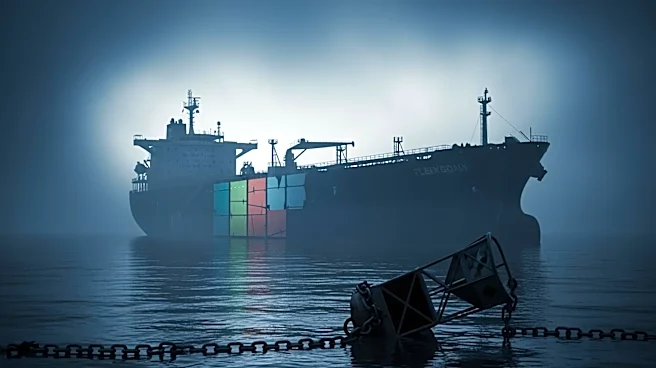
France is advancing legislation aimed at increasing penalties for vessels operating under false flags, a move targeting the shadow tanker fleet involved in circumventing sanctions on the Russian oil industry. The proposed law, reported by Agence France-Presse
(AFP), seeks to double fines to €300,000 ($350,000) and impose up to two years in prison for violations. If the safety of individuals boarding these vessels is compromised, fines could escalate to €700,000 ($818,000) with a potential seven-year prison sentence. This legislative push follows France's recent detentions of several tankers suspected of false flag operations, including the Boracay, Grinch, and Deyna. French President Emmanuel Macron has been vocal about the need for stringent measures against these fleets, advocating for broader European Union enforcement.
Why It's Important?
The proposed legislation underscores France's commitment to enforcing international maritime laws and sanctions, particularly against the backdrop of geopolitical tensions involving Russia. By targeting shadow tankers, France aims to disrupt illegal oil trade routes that undermine sanctions. This move could have significant implications for global maritime operations, potentially leading to increased scrutiny and enforcement actions by other nations. The legislation also highlights the broader European effort to maintain maritime security and uphold international law, which could influence global shipping practices and compliance standards.
What's Next?
The draft legislation is currently under review by the French Parliament and is expected to be debated and voted on by July 14. If passed, it could set a precedent for other countries to adopt similar measures, potentially leading to a coordinated international effort to combat illegal maritime activities. Stakeholders in the shipping industry may need to reassess their compliance strategies to avoid severe penalties. Additionally, the European Union may consider further actions to support member states in enforcing maritime laws, which could involve increased collaboration and resource sharing.