





What's Happening?
Researchers at the University of British Columbia (UBC) Okanagan, in collaboration with BC-based Unilia (Canada) Fuel Cells Inc. and Harbour Air Aerospace Services Ltd., are undertaking a $10.6-million project to advance hydrogen fuel cell technology
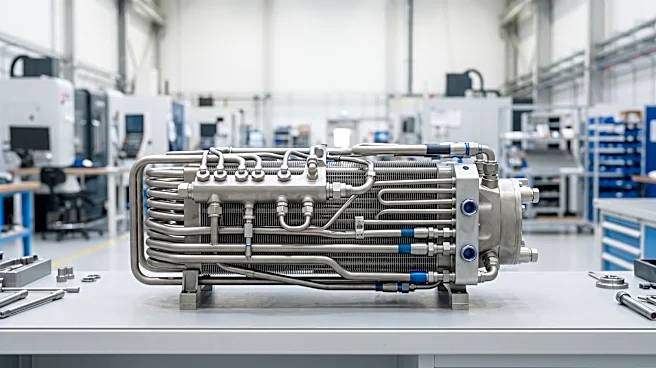
for aviation. The initiative, supported by a $3.7-million contribution from the Initiative for Sustainable Aviation Technology (INSAT) and the Government of Canada, aims to create fuel cells that are significantly lighter and more durable than existing models. Dr. Joshua Brinkerhoff, an associate professor of mechanical engineering at UBC Okanagan, highlighted that designing fuel cells for aircraft presents unique challenges compared to ground or marine applications, primarily due to the need for substantial power delivery while maintaining lightness and reliability across varying temperatures and operating conditions. The project involves UBC researchers modeling and optimizing fuel cell-battery hybrid configurations and testing materials under flight-relevant conditions, while Unilia focuses on pairing high-performance fuel cell cores with lightweight components to build compact, high-power stacks.
Why It's Important?
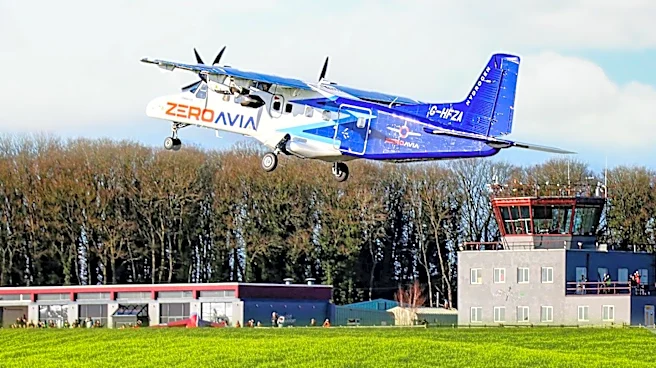
This collaboration is crucial for the decarbonization of the aviation sector, which currently relies heavily on fossil fuels. Hydrogen fuel cells offer a zero-emission alternative, producing only water vapor during operation. The current limitations of fuel cell technology, particularly in meeting the stringent weight, performance, and durability requirements of commercial aircraft, have hindered widespread adoption. By addressing these technical barriers, the project could pave the way for the development of viable hydrogen-powered aircraft, significantly reducing the carbon footprint of air travel. The involvement of industry partners like Unilia and Harbour Air ensures that the research is directly applicable to real-world aviation needs, accelerating the transition towards sustainable aviation and potentially creating new economic opportunities in green technology and aerospace manufacturing.
What's Next?
The immediate next steps involve the research team developing aviation-specific designs to enhance fuel cell performance and durability. The partners aim to demonstrate the technical viability of a fuel-cell-stack prototype with sufficient power density for short- and medium-range commercial aircraft. While further development and testing will be necessary before commercial flight applications, this project represents a critical advancement. Denis Godin, Chief Technology Officer and Deputy CEO of Strix, emphasized that this project reflects the strength of Canada's aerospace innovation ecosystem and will help accelerate solutions to enhance Canada's competitiveness in sustainable aviation. The findings from this research could influence future aircraft design and propulsion systems, potentially leading to pilot programs and eventual integration of hydrogen fuel cells into commercial fleets.
Beyond the Headlines
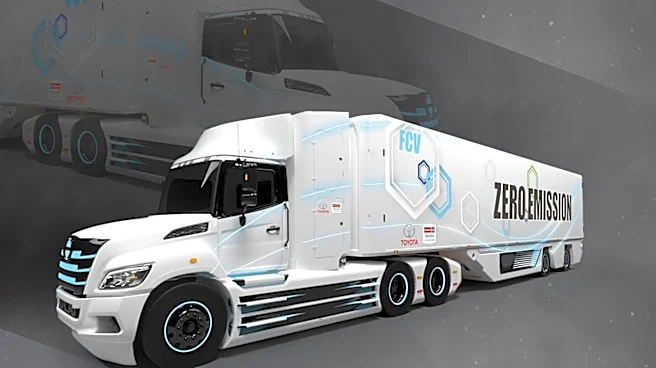
The broader implications of this research extend beyond just cleaner air travel. A successful breakthrough in aviation-specific hydrogen fuel cells could spur innovation across other heavy-duty transportation sectors, such as long-haul trucking and maritime shipping, where similar demands for high power-to-weight ratios and extended range exist. It also highlights a growing trend of cross-sector collaboration between academia and industry, driven by the urgent need for sustainable solutions. The project's focus on modular fuel cell stacks and advanced materials could lead to more efficient and cost-effective hydrogen energy systems overall. Furthermore, the development of a robust hydrogen infrastructure to support aviation would have positive ripple effects, making hydrogen more accessible and affordable for other applications, thereby accelerating the global energy transition.